



 212
/
6
Min Read
212
/
6
Min Read


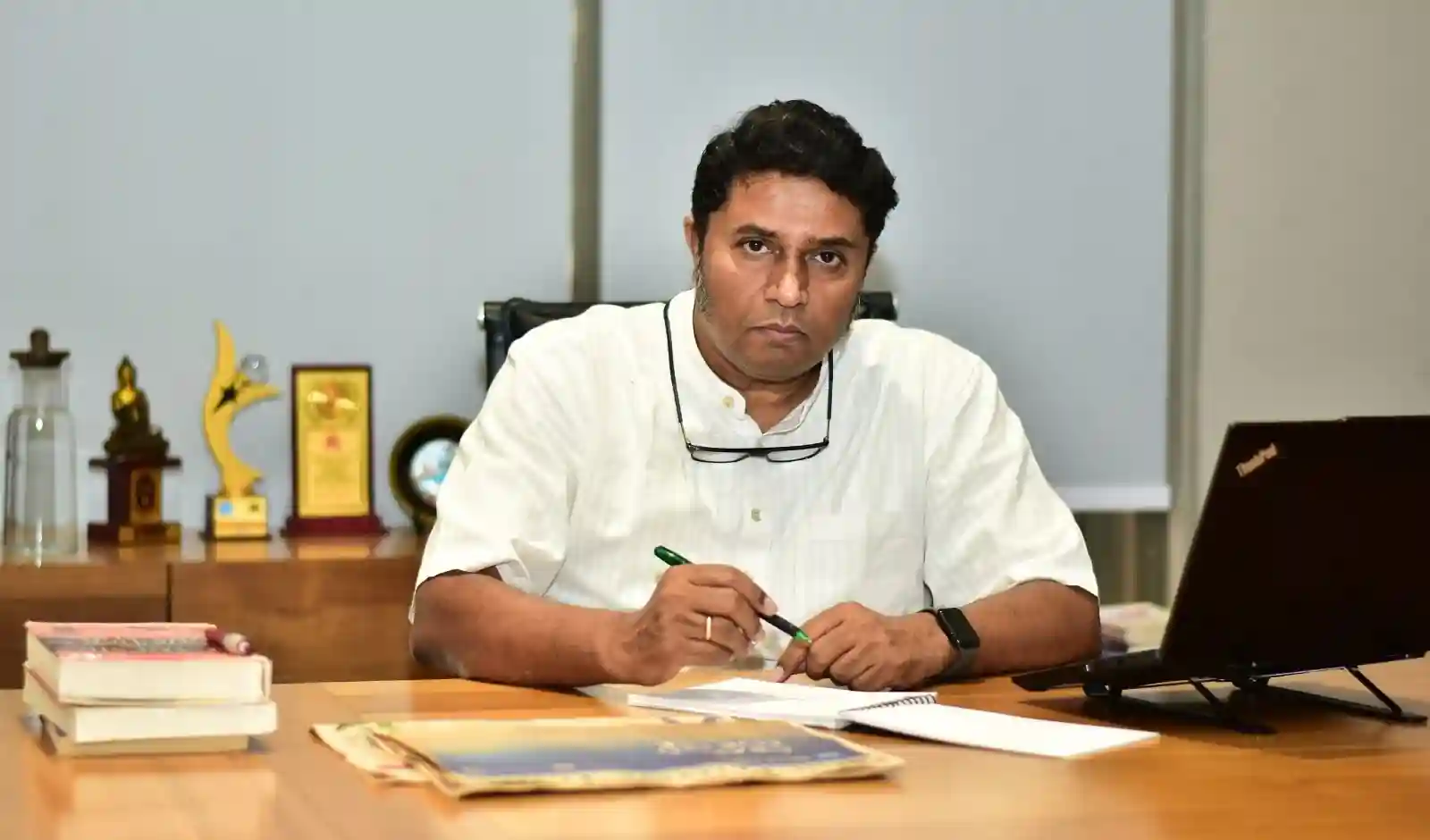
Prof. Keyoor Purani, Vice Chancellor of Prestige University, Indore, has over two decades of experience in higher education, management, industry-academia collaboration, and academic innovation. Under his leadership, the university has focused on industry-oriented education, experiential learning, multidisciplinary learning, and future-ready academic models. Recently, Prestige University's 32-acre campus was named a Jury Winner in the Higher Education & Research Facilities category at the Architizer A+ Awards 2026, earning global recognition.
In this exclusive conversation with Entrepreneur Media, Prof. Purani shares his views on employability, the National Education Policy (NEP 2020), experiential learning, and the future of higher education in India.
1. India produces millions of graduates every year, yet employability remains a challenge. In your view, where is the disconnect between higher education and industry expectations?
Prof. Keyoor Purani: I believe we are often asking the wrong question. Employability is not a challenge that universities alone can solve. It is the result of a partnership between educational institutions, industry and students themselves.
Today, there is an increasing tendency to define employability only through skills, certifications and immediate job readiness. We are also witnessing the growth of what I call a "para-academic ecosystem" coaching institutes, edtech companies, certification providers and corporate academies. These organizations play an important role, but they complement universities rather than replace them.
Universities should not only prepare students for today's jobs but also develop individuals who can adapt to technological changes, economic shifts and evolving careers. Similarly, industry should highlight emerging challenges and capability gaps, but curriculum design must remain the responsibility of educators.
2. You often speak about outcome-driven education. How does Prestige University design its academic programmes with employability as the end goal?
Prof. Purani: Employment is about getting a job, while employability is the ability to remain relevant throughout one's career. At Prestige University, employability is an important outcome, but our real objective is to build long-term capability.
This philosophy is reflected in our MPLO (Multi-Path Learning Opportunities) model. The future will not be defined by one degree and one profession. Students will change careers, industries and disciplines throughout their lives.
Therefore, when designing programmes, we begin by asking what kind of graduate we want to develop. The curriculum, internships, projects and learning experiences are then aligned with that vision.
3. What does "designing a degree programme backwards from employment outcomes" mean in practical terms?
Prof. Keyoor Purani: This idea is often misunderstood. It does not mean allowing employers or technology companies to dictate university education.
Instead, we begin by identifying the capabilities every graduate should possess critical thinking, communication, ethical judgment, teamwork, adaptability and problem-solving. Once these competencies are defined, courses, internships, assessments and projects are designed to help students develop them.
At Prestige University, our academic team has also mapped 21st-century skills with teaching methodologies and created a faculty playbook to support outcome-based learning.
4. How effectively has the National Education Policy (NEP 2020) been implemented?
Prof. Purani: The NEP has successfully changed the conversation around higher education. Institutions are now discussing flexibility, multidisciplinary education and learner choice more seriously.
However, implementation remains the bigger challenge. Simply adding electives or offering more choices does not automatically create flexibility or multidisciplinary learning. Universities need to redesign the entire learning journey.
The true spirit of NEP lies in giving students greater ownership of their education while maintaining academic rigour. Many institutions are complying with the policy, but relatively few are fully leveraging its transformative potential.
5. What advantages do newer institutions like Prestige University have over legacy institutions?
Prof. Keyoor Purani: Established institutions enjoy the advantages of reputation, alumni networks and public trust.
New universities, however, have the freedom to innovate and adapt quickly. They are not restricted by traditional structures and can experiment with new academic models.
That said, younger institutions must earn credibility every day. The biggest risk for older institutions is complacency, while the biggest challenge for newer institutions is imitation. Our focus is on creating a university designed for India's future rather than copying existing models.
6. How does Prestige University integrate experiential learning into its academic framework?
Prof. Purani: There is an important difference between exposure and immersion. A guest lecture or an industry visit provides exposure, but true learning comes through immersion. At Prestige University, immersive learning is one of our core academic pillars. Students participate in extended internships, live projects, industry assignments, simulations and field-based learning experiences.
We also encourage innovative learning methods such as theatre-based immersive learning and LEGO® Serious Play® workshops, helping students build creativity, collaboration, leadership and problem-solving skills.
7. What one change would you recommend to improve employability in Indian higher education?
Prof. Keyoor Purani: Universities should stop treating employability as an activity limited to placement season.
Every academic programme should clearly define the capabilities students are expected to develop, explain where these capabilities will be practised, and describe how they will be assessed. When institutions intentionally focus on capability development instead of simply placement statistics, employability naturally improves.
8. What is your vision for Prestige University and the future of higher education in India?
Prof. Keyoor Purani: As a young university, we have the opportunity to rethink higher education before becoming bound by traditional approaches. Our future plans include expanding into emerging disciplines, strengthening research, building international collaborations, and continuously improving flexible learning models such as MPLO. Our long-term vision is to build an institution that balances academic excellence with industry relevance while encouraging innovation, curiosity and lifelong learning.
Conclusion
Prof. Keyoor Purani believes that India's future depends not on producing a larger number of graduates, but on developing future-ready, adaptable and capable professionals. According to him, higher education must go beyond training students for jobs and instead prepare them to solve real-world challenges, embrace continuous learning and lead with innovation.
He emphasizes that the future of education lies in a balanced partnership where industry brings real-world challenges, universities provide intellectual depth and students are empowered with meaningful learning experiences and responsibilities. Such an approach, he believes, will enable India to build a globally competitive and future-ready workforce.


