


 97
/
4
Min Read
97
/
4
Min Read


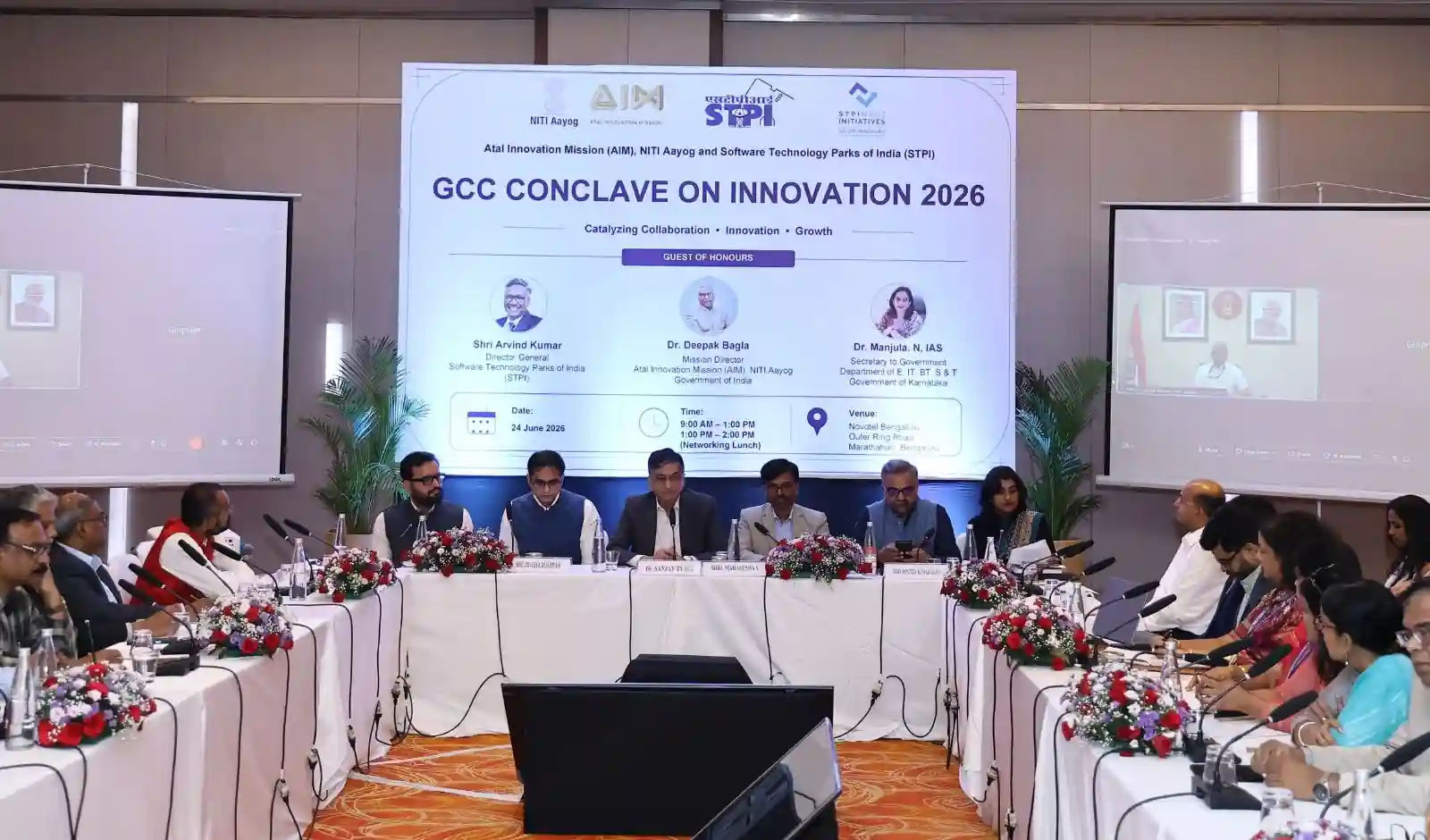
With the objective of further strengthening India’s innovation and entrepreneurship ecosystem, the Atal Innovation Mission (AIM) of NITI Aayog and the Software Technology Parks of India (STPI) jointly organized the GCC Innovation Summit 2026. The event brought together representatives from Global Capability Centers (GCCs), educational institutions, research organizations, startups, incubators and policymakers to discuss ways to strengthen collaboration between innovation, research and industry.
The primary objective of the summit was to build stronger partnerships between India’s innovation ecosystem and Global Capability Centers, creating a robust innovation pipeline that connects school-level innovation with startups and industry. The event highlighted the growing importance of collaboration between education, research and industry in driving India’s development.
Senior representatives from global companies including Intel, IBM, Bosch, Amazon, SAP, Thermo Fisher Scientific, CGI, Shell, Mercedes-Benz, Philips, Morgan Stanley, NVIDIA, Samsung, SanDisk, Wipro and Yahoo participated in the summit. Representatives from Atal Tinkering Labs (ATL), Atal Incubation Centres (AIC), Atal Community Innovation Centres (ACIC), STPI Entrepreneurship Centres, Karnataka Digital Economy Mission (KDEM) and various startup organizations were also part of the event.
Emphasis on Connecting Education and Innovation
A key focus of the summit was the need for schools, higher education institutions, research centers and industry stakeholders to work together to promote innovation in India. Discussions explored opportunities for collaboration between AIM’s various initiatives and the GCC ecosystem.
Speaking at the event, Arvind Kumar, Director General of STPI, said that India’s GCC ecosystem has emerged as one of the strongest technology networks in the world. With more than 2,100 GCCs generating nearly USD 100 billion in revenue, he noted that innovation and economic growth thrive when Indian talent meets global opportunities.
He added that STPI has been supporting technology infrastructure, digital connectivity and entrepreneurship in India for over three decades. Through this partnership, AIM and STPI aim to create a common platform connecting schools, colleges, startups and industries, enabling young innovators to transform their ideas into real-world products and businesses.
New Opportunities for Students and Startups
Deepak Bagla, Mission Director of Atal Innovation Mission, highlighted AIM’s role in advancing Prime Minister Narendra Modi’s vision of “Jai Anusandhan” (Hail Research). He noted that more than 10,000 Atal Tinkering Labs across the country are fostering innovation and scientific thinking among millions of students, while over 100 incubation centers are supporting startups and young entrepreneurs.
Bagla stated that India is rapidly emerging as a global hub for technology, engineering and innovation. Strengthening collaboration between GCCs and the startup ecosystem can create new opportunities for young people. He encouraged industry leaders to actively participate in AIM’s initiatives by mentoring students and startups and contributing to innovation challenges.
Speaking at the summit, Dr. Sanjay Tyagi, Director of STPI Bengaluru, said that Bengaluru remains one of India’s most vibrant technology and innovation hubs. He emphasized that the partnership between STPI and AIM can help build stronger connections among young innovators, startups and industries, accelerating technology development, startup growth and job creation.
Key Discussion Themes at the Summit
The summit featured detailed discussions around four major themes: promoting school-level innovation through Atal Tinkering Labs, supporting startup development through Atal Incubation Centres and Atal Community Innovation Centres, scaling innovation through AIM’s upcoming industrial accelerator initiative AACSES and fostering industry-led innovation through STPI entrepreneurship centers and joint accelerator platforms.
Participants also explored how GCCs can collaborate with Indian startups and innovators through mentorship, technology validation, pilot projects, innovation challenges, market access opportunities and sector-specific accelerator programs.
In this context, experts emphasized that stronger collaboration among education, research, industry and startups is essential for enhancing India’s global innovation capabilities. The GCC Innovation Summit 2026 marked an important step in that direction. The initiative is expected to create new opportunities for students and young entrepreneurs while helping position India as a leading global hub for innovation and technology.


