


 88
/
4
Min Read
88
/
4
Min Read


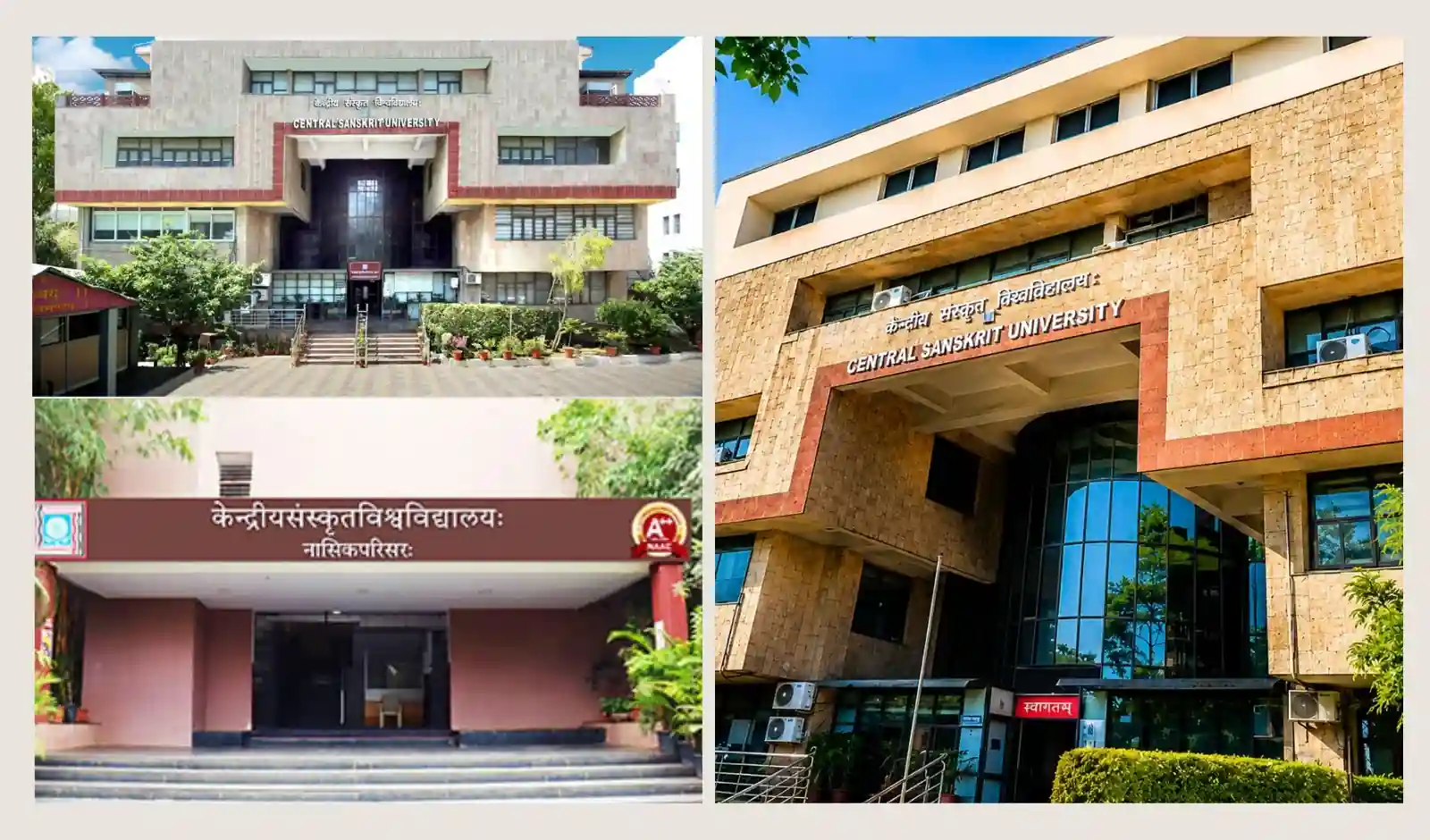
Taking a significant step towards integrating technology with traditional education, the Central Sanskrit University (CSU) has announced the launch of a BTech programme in Artificial Intelligence (AI) and Data Science from the 2026-27 academic session. The university has become the first Sanskrit university in India to introduce an AICTE-approved BTech programme.
According to the university, the four-year undergraduate programme will provide students with an opportunity to engage with cutting-edge technologies while remaining connected to India’s rich intellectual and cultural heritage. The initiative aims not only to produce technology professionals but also to develop graduates who understand both modern innovation and traditional knowledge systems.
New Programme to Be Offered at Nashik Campus
The BTech programme will be conducted at the Nashik campus of Central Sanskrit University. The university has received formal approval from the All India Council for Technical Education (AICTE) and the admission process for the 2026-27 academic session has already begun.
University officials said that the programme has been designed to meet current industry requirements while also introducing students to Indian languages, culture and traditional knowledge systems. In this way, the course seeks to serve as a bridge between modern technical education and India’s intellectual heritage.
Unique Integration of AI and Indian Knowledge Systems
Unlike conventional engineering programmes, the new BTech course combines modern disciplines such as Artificial Intelligence, Machine Learning, Data Science and Computational Technologies with Indian Knowledge Systems (IKS).
According to the university, the knowledge embedded in Sanskrit texts and traditional Indian knowledge traditions can be preserved, analyzed and applied through modern technological tools. The curriculum has been designed with this vision in mind. Students will not only gain a strong foundation in AI and Data Science but will also learn how these technologies can be applied to the preservation, digitization and dissemination of Indian languages, ancient manuscripts and traditional knowledge resources.
New Research and Career Opportunities for Students
The university stated that students will receive training in areas such as Natural Language Processing (NLP), Computational Linguistics, Manuscript Digitization, Data Analytics, Machine Learning Modelling and Knowledge Preservation Technologies.
Experts believe that AI-powered technologies are playing an increasingly important role in preserving India’s linguistic and literary heritage, including vast collections of Sanskrit manuscripts and traditional knowledge resources. As a result, the programme has the potential to open new avenues for research, innovation and employment.
In addition, it can provide students with career and research opportunities in emerging fields such as AI, Data Science, Machine Learning, Language Technologies and Digital Heritage Preservation.
Prime Minister Narendra Modi Praises the Initiative
Prime Minister Narendra Modi praised the initiative during his radio programme Mann Ki Baat, describing it as an excellent example of how India can move forward by combining technological advancement with its rich knowledge traditions.
He noted that such programmes help prepare young people for emerging technologies while keeping them connected to their cultural and intellectual heritage. According to the Prime Minister, the future of education lies in maintaining a balance between innovation and tradition.
Curriculum Designed in Line with AICTE Standards
According to the university’s admission notification, the programme will have a total of 66 seats (60 regular seats and 6 additional seats). Admissions will be based on JEE Main 2026 scores and the university’s entrance process.
The curriculum will place equal emphasis on theoretical learning, laboratory work, project-based education, industry-academia collaboration, research activities and technical training. This approach is expected to provide students with practical exposure and industry-relevant skills.
Who Can Apply?
The university has stated that applicants must have passed Class 12 (or equivalent) with Physics and Mathematics as compulsory subjects.
In addition, candidates should have studied at least one of the following subjects: Chemistry, Computer Science, Electronics, Information Technology, Biology, Informatics Practices, Biotechnology, Technical Vocational Subjects, Agriculture, Engineering Graphics or Business Studies. Detailed information regarding eligibility criteria, seat distribution and the admission process is available on the university’s official website. https://www.sanskrit.nic.in/
A New Chapter in Technical Education
Education experts believe that this initiative by Central Sanskrit University reflects the changing landscape of higher education in India. The National Education Policy (NEP) 2020 also emphasizes multidisciplinary learning and the integration of Indian Knowledge Systems with modern academic disciplines.
By combining future-focused fields such as AI and Data Science with India’s traditional knowledge heritage, the programme is expected to give a new direction to technical education while demonstrating that tradition and modernity can complement one another. Such initiatives could play a significant role in positioning India as a global hub for knowledge, research and innovation.


