


 226
/
4
Min Read
226
/
4
Min Read


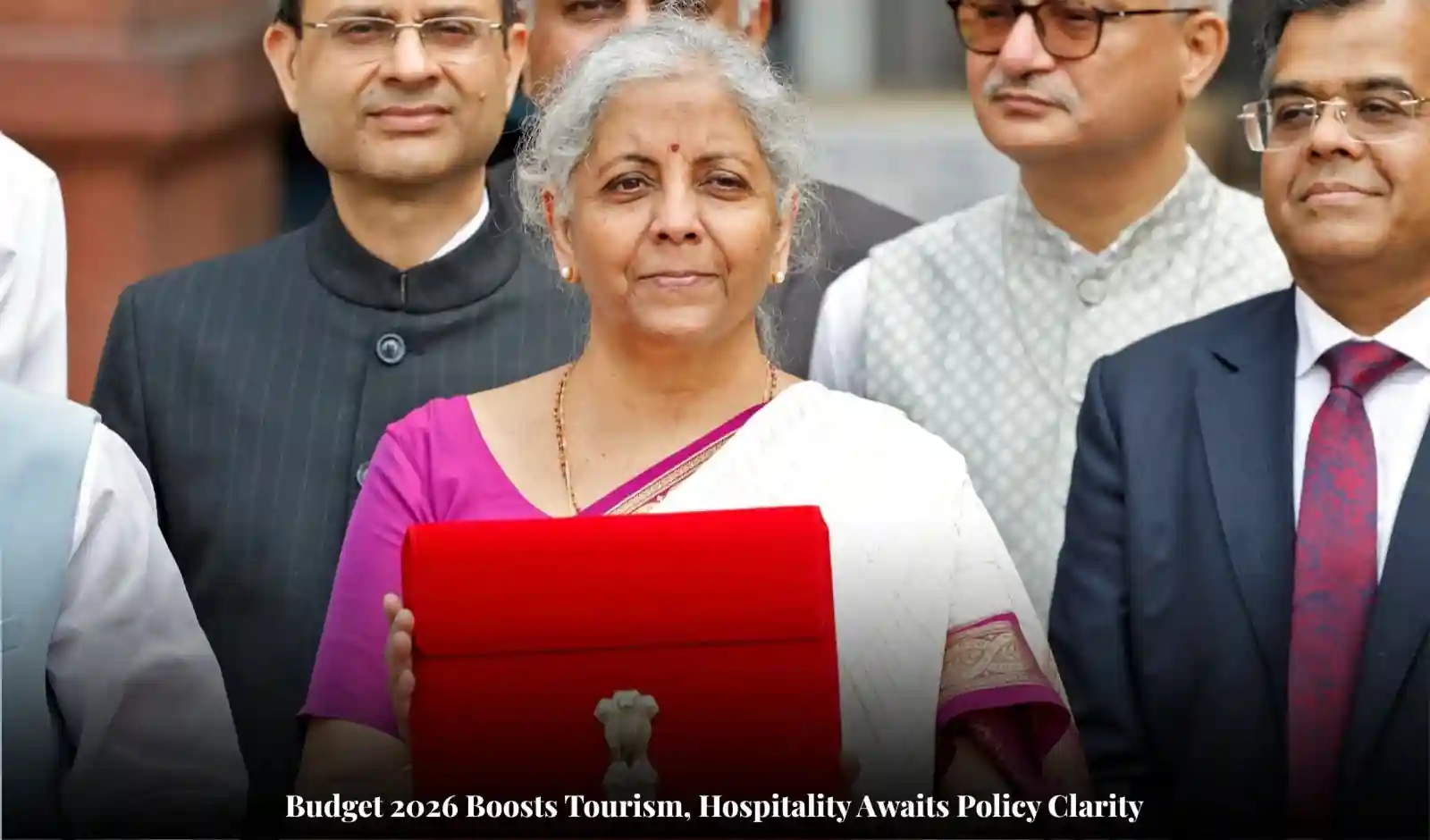
The hospitality and food services industry welcomed the Union Budget 2026–27 for its clear thrust on tourism, infrastructure-led growth and skill development, even as long-standing concerns around taxation and industry status remain unaddressed.
While the Budget stopped short of granting comprehensive infrastructure status to hospitality—a long-pending demand the sector views the broader policy direction as growth-oriented, particularly for tourism, travel connectivity and expansion beyond metros.
Restaurants Welcome Skill Push, Seek Tax Relief
Restaurant operators broadly welcomed the focus on talent creation and tourism readiness but flagged unresolved structural challenges.
“The Union Budget 2026 reflects a strong commitment to sustainable growth, infrastructure-led development, and ease of doing business. For the QSR industry, the focus on Tier 2 and Tier 3 cities, logistics efficiency, and skilling creates a powerful foundation for the next phase of expansion,” shared Aayush Madhusudan Agrawal, Founder and Director, Lenexis Foodworks.
Pranav Rungta, Co-founder & Director, Nksha Restaurant and Vice President, NRAI Mumbai, described the budget as a positive step for hospitality capacity building.
“Announcements like the first-ever National Institute of Hospitality and structured skill development for tourist guides will strengthen service standards and prepare our workforce to meet growing domestic and international demand,” Rungta said. However, he pointed out that cost pressures remain a concern for restaurants.
“At the same time, restaurants continue to face structural challenges such as GST on commercial leases, lack of access to export incentives like SEIS, and the need for easier SME support. Addressing these alongside rising tourism and dining demand is key to building a resilient, sustainable and globally competitive hospitality sector.”
Preparing for a More Competitive Future
From the alcobev industry’s standpoint, the budget signals continuity rather than disruption, especially with alcoholic liquor remaining outside the GST framework.
Vidhatha Annamaneni, Co-founder, Ironhill, said the real message lies in India’s increasing global alignment rather than domestic tax reform.
“From the alcobev industry perspective, this budget reinforces a reality the industry understands well—that structural reform in alcohol will continue to be gradual, not dramatic. Keeping alcoholic liquor outside GST maintains the status quo, but the real signal lies elsewhere,” he added.
According to Annamaneni, the India–EU Free Trade Agreement and phased tariff reductions across spirits, wine and beer will steadily reshape the competitive landscape.
“These changes point to a more competitive, globally aligned market over the next decade. For Indian brands, this is both an opportunity and a wake-up call. Lower duties will raise the bar on quality, consistency and brand-building, especially as premiumisation accelerates.”
Also, players believed that reduction in TCS is a practical move that eases working capital pressures across the value chain. What the industry needs next is predictability—rationalised customs structures and faster resolution of legacy disputes.
Tier 2 and Tier 3 Cities Emerge as Growth Engines
The budget’s emphasis on connectivity, regional development and tourism infrastructure is expected to unlock demand in emerging markets beyond major cities.
Shakir Haq, CEO, NKP Empire, said the policy direction creates new opportunities for organised dining brands.
“The budget sends a clear signal that growth over the next few years will be driven by better infrastructure, stronger tourism and deeper development across Tier 2 and Tier 3 cities,” Haq mentioned by adding that as connectivity improves and more destinations open up, travel and local consumption will naturally rise, creating new demand for food and hospitality businesses beyond the metros.
For restaurant groups like NKP Empire, he noted, this shift enables expansion into underpenetrated markets.
Hotels See a Future-Ready Tourism Blueprint
Hotel operators see budget 2026 as a comprehensive policy framework that integrates talent, technology, sustainability and connectivity.
Sarbendra Sarkar, Managing Director & Founder, Cygnett Hotels & Resorts, said the budget places India firmly on a high-growth tourism trajectory.
“Budget 2026 presents a comprehensive and future-ready vision for tourism and hospitality. The focus on building a world-class hospitality talent hub and professional guide training will significantly raise service standards and create a globally benchmarked workforce.”
He highlighted the importance of digital destination platforms and creator-led tourism promotion. “This modern, data-driven approach will enhance visibility and demand across regions.” Sarkar also welcomed the reduction of TCS on overseas tour packages to 2 percent and major mobility initiatives.
 This article was originally
published by the Restaurantindia.in. To read the full version,
visit here
This article was originally
published by the Restaurantindia.in. To read the full version,
visit here 


