


 86
/
3
Min Read
86
/
3
Min Read


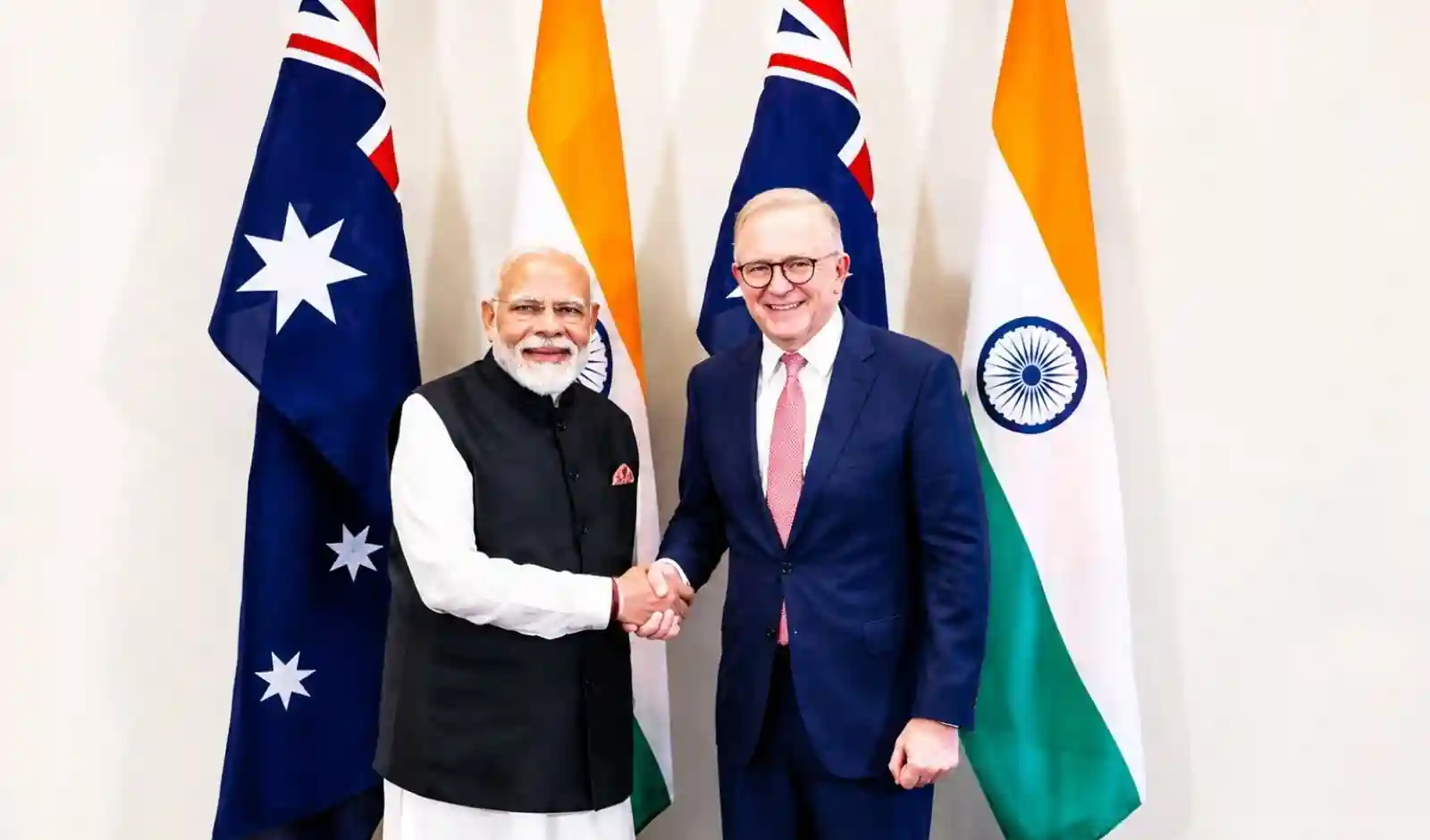
The agreement was signed during the Third India–Australia Annual Leaders' Summit in Melbourne in the presence of Prime Minister Narendra Modi and Australian Prime Minister Anthony Albanese.
The agreement is expected to enhance the patent examination process while also opening new avenues for collaboration in education, research, innovation, traditional knowledge preservation and institutional partnerships. Experts believe it will strengthen the global protection of India's traditional knowledge and further promote academic and research collaboration between the two countries.
The World's First Traditional Knowledge Digital Library
India developed the world's first Traditional Knowledge Digital Library (TKDL) to prevent the misuse of its traditional knowledge and the wrongful grant of patents. Under the agreement, IP Australia will gain access to the TKDL database, enabling the Australian Patent Office to identify relevant prior art related to India's traditional knowledge while examining patent applications.
A Digital Repository of Over 520,000 Traditional Knowledge Records
Established in 2001 through a joint initiative of CSIR and the Ministry of AYUSH, the digital repository contains more than 520,000 formulations, medicinal practices and traditional knowledge records related to Ayurveda, Unani, Siddha, Sowa-Rigpa, and Yoga. To facilitate global use, the database has been translated into five international languages English, German, French, Japanese and Spanish.
According to CSIR, TKDL has helped revoke, amend, reject, or withdraw more than 375 wrongful patent applications based on India's traditional knowledge. Following the agreement with IP Australia, 18 major patent offices worldwide now have access to the database under Non-Disclosure Agreements (NDAs).
A New Momentum for Education and Research Collaboration
Prof. Nimay Kalyani, Campus Director, University of Wollongong India, said that the agreement goes beyond the protection of traditional knowledge and will provide fresh momentum to India-Australia cooperation in education, research, innovation and intellectual property.
According to him, in addition to student mobility, both countries are increasingly focusing on institutional collaboration, mutual recognition of qualifications and the development of integrated education pathways, which will further strengthen partnerships between universities and industry.
He also noted that International Branch Campuses established in GIFT City, India's global financial and technology hub, will enable students to access world-class international education within the country while contributing to the development of globally competitive talent, research and industry-driven innovation ecosystems.
A New Milestone in the India-Australia Partnership
Notably, the CSIR-TKDL agreement is among the 18 key bilateral outcomes announced during the India–Australia Annual Leaders' Summit. The two countries also agreed to deepen cooperation across several strategic sectors, including defence, energy, education, skill development, science and technology, filmmaking, traditional knowledge protection and cultural heritage.
Experts believe the agreement will not only strengthen the global protection of India's traditional knowledge but also reinforce the long-term India-Australia partnership in education, research, innovation and intellectual property, paving the way for deeper institutional collaboration in the years ahead.


