


 496
/
2
Min Read
496
/
2
Min Read


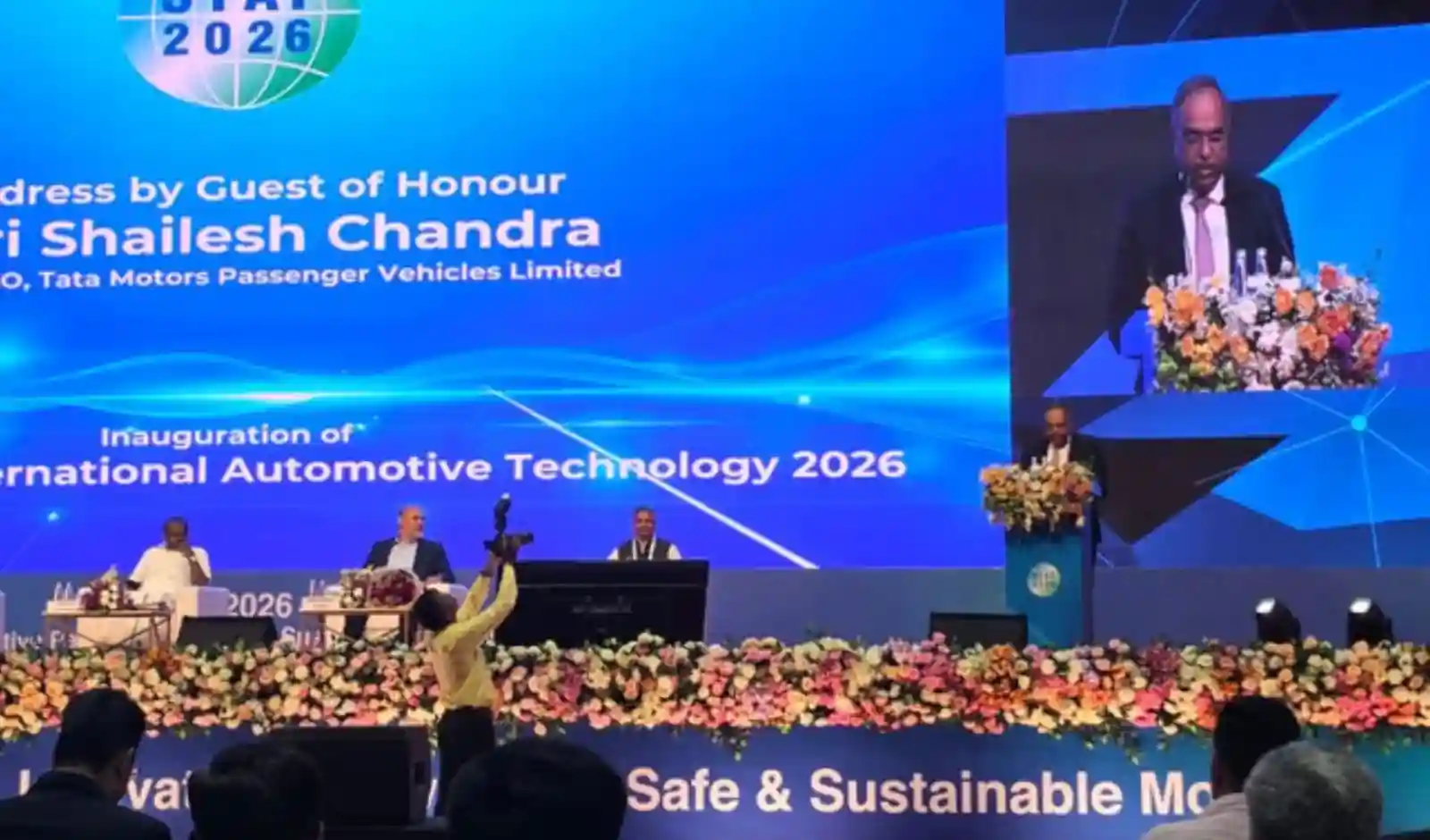
Shailesh Chandra, Managing Director of Tata Motors Passenger Vehicles, said India has a unique opportunity to position itself as a global hub for electric and sustainable mobility, driven by the ongoing transformation of the automotive sector. He was delivering the keynote address at SIAT 2026, organised by the Automotive Research Association of India (ARAI).
Describing electrification as “an opportunity rather than a constraint,” Chandra said the transition to clean mobility can enable India to become a centre for electric mobility, advanced manufacturing, and innovation. He highlighted the importance of strong supply chains, policy alignment, and industry–academia collaboration in supporting this shift.
Chandra noted that the Indian automotive industry is currently at the intersection of three major transitions sustainability, safety, and rapid technological advancement and how these changes are managed will define India’s future role in the global mobility ecosystem. “Sustainability is no longer a choice but an immediate national challenge,” he said, adding that India’s economic growth and rising mobility aspirations must align with cleaner technologies, lower emissions, and reduced dependence on fossil fuels.
On safety, Chandra said the industry has made significant progress over the past decade through stronger vehicle structures, improved restraint systems, and the adoption of global safety standards. However, he emphasised that the next phase must focus on accident prevention through wider deployment of active safety and driver-assistance technologies, supported by transparent and credible testing frameworks.
Addressing rapid technological change, he said Indian consumers are becoming increasingly informed and digitally savvy, with expectations for advanced technology, connectivity, and safety extending across all vehicle segments, including entry-level models. Automobiles, he noted, are evolving from mechanical products into software-defined machines, with software playing a central role in user experience and continuous improvement across a vehicle’s lifecycle.
Looking ahead, Chandra said India’s automotive growth story remains strong, with electrification, higher safety standards, and software-led vehicles acting as markers of growth rather than barriers. Successfully managing this transformation, he added, will require strong partnerships across the value chain, sustained capability building, and the intelligent use of emerging technologies such as artificial intelligence.


