


 116
/
2
Min Read
116
/
2
Min Read



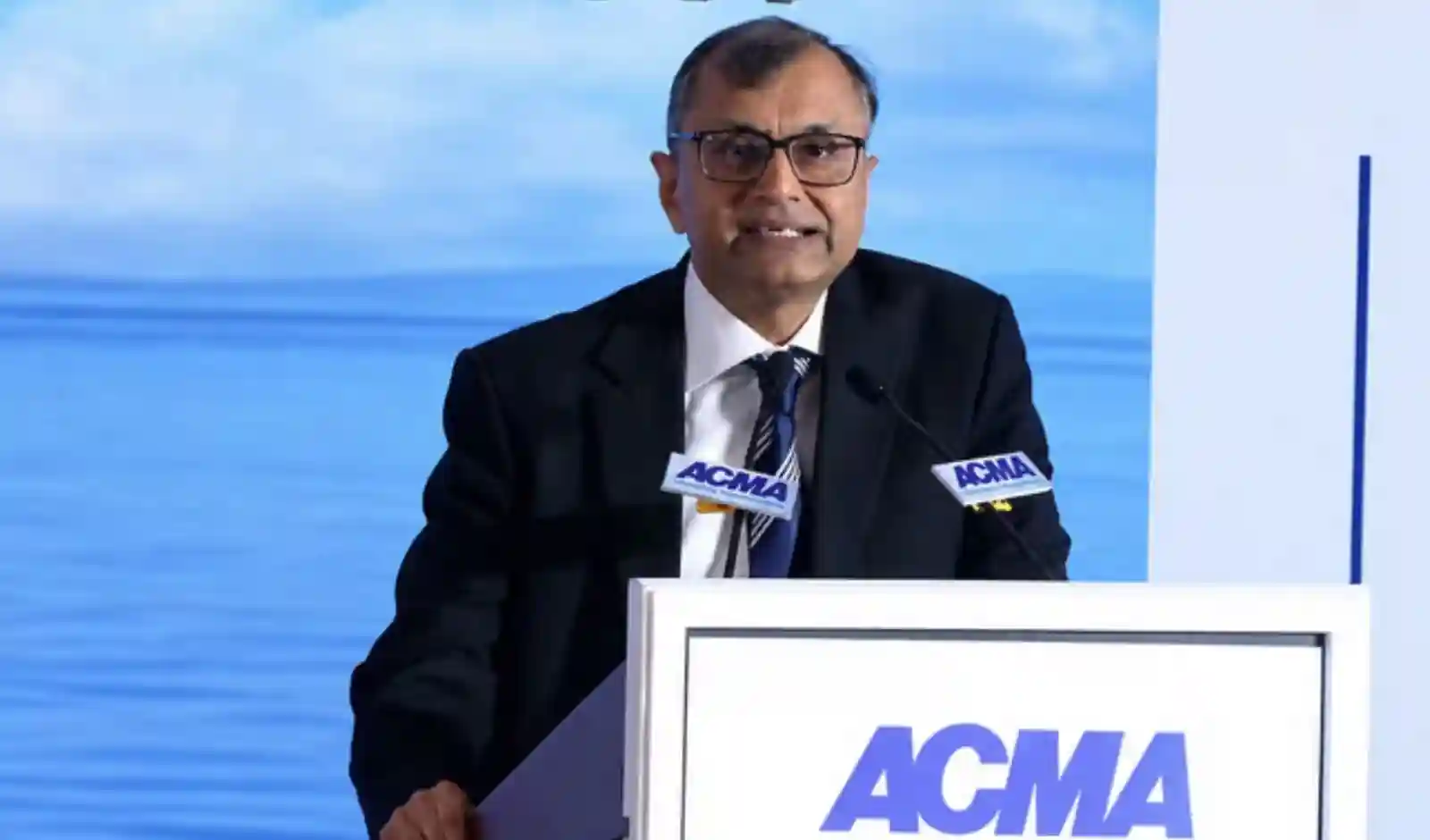
Hyundai Motor India Managing Director and Chief Executive Tarun Garg has called on the Indian automotive industry to strengthen domestic capabilities in critical technologies that will shape the future of mobility. He said India has achieved significant manufacturing scale in the automotive sector, but now needs to accelerate efforts to become self-reliant in the design, development and manufacturing of advanced technologies.
Speaking at the 66th Annual Session of ACMA, Garg said India needs to build domestic capabilities in semiconductor chips, EV battery cells, power electronics and other critical technologies. According to him, the automotive industry needs to move beyond its existing manufacturing scale to achieve greater technological self-reliance.
He said India has made significant progress in manufacturing, but the country now needs to strengthen its capabilities in the design, development and manufacturing of future automotive technologies.
According to Garg, India's auto-component industry exported around $24 billion worth of components in FY2026, while imports stood at approximately $25.4 billion, resulting in a trade deficit of around $1.4 billion.
However, he said the challenge goes beyond the trade deficit. India's component exports are still largely concentrated in relatively mature and conventional technologies, while imports are increasingly driven by advanced and higher-value technologies.
Garg urged auto-component manufacturers to develop stronger domestic technology capabilities and increase investments in research and development (R&D) and innovation.
He said India needs to develop domestic capabilities in semiconductors, rare-earth magnets, power electronics and battery cells to achieve strategic self-reliance. According to him, merely using these technologies is not enough; India must also develop ownership and manufacturing capabilities in these critical areas.
Garg also urged auto-component companies to move beyond conventional component exports and focus on developing advanced technologies and engineering capabilities.
He outlined five key priorities for the industry — mastering one critical technology, localising one imported component, creating one Indian patent, entering one global market and integrating AI into every business function.
Garg said that if automotive industry leaders commit to these five actions, they could create a significant and transformative impact on India's automotive sector.
The call comes as India seeks to strengthen its domestic automotive supply chain and reduce dependence on imports of critical technologies amid the industry's transition towards electric and software-defined mobility.


