


 127
/
5
Min Read
127
/
5
Min Read


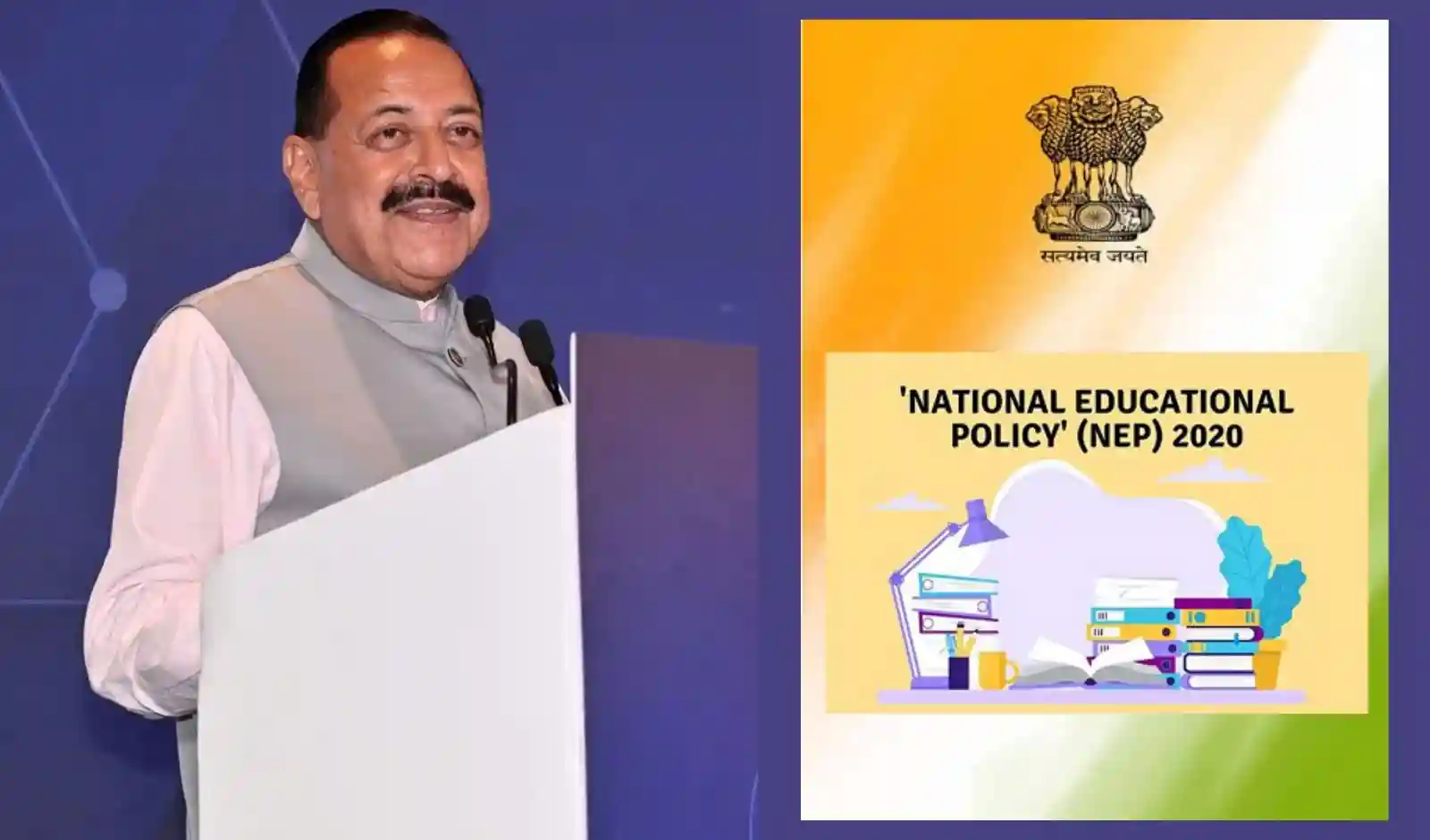
Union Minister of State (Independent Charge) for Science & Technology and Earth Sciences, Dr. Jitendra Singh, has described the National Education Policy (NEP) 2020 as one of the most transformative reforms in India’s education sector in recent decades. He said the policy has made education more flexible, inclusive and student-centric.
According to him, NEP 2020 is among the most significant achievements of the Modi government over the last 12 years, as it has empowered students to pursue education that aligns with their interests, abilities and future aspirations.
Addressing The Week Education Conclave 2026, Dr. Singh said that under the earlier education system, students were often confined to predetermined academic streams and subject combinations. Many students had to choose subjects based on the expectations of their parents or society, even when their interests lay elsewhere.
The new education policy has transformed this approach by giving learners the freedom to select subjects and career paths according to their own preferences and talents.
He stated that one of the greatest benefits of NEP 2020 is that it has liberated students from the “prison of subjects.” Earlier, rigid boundaries existed between traditional streams such as Science, Commerce and Arts. Today, students can combine subjects from different disciplines and create personalized learning pathways. This has made education more practical, multidisciplinary, and aligned with the demands of the modern world.
Students Gain the Freedom to Choose Careers Based on Their Interests
Dr. Singh explained that the new policy also allows students to modify their courses and subject choices according to their evolving interests and career goals. Students who do not wish to follow conventional career paths now have access to a wide range of emerging fields. Today, learners can pursue disciplines such as Biotechnology, Artificial Intelligence, Data Science, Literature, Design, Environmental Studies and several other multidisciplinary areas based on their interests and capabilities.
He noted that the impact of this change extends beyond education and is helping improve the quality of India’s future workforce. Young people are now selecting careers based on genuine interest and aptitude rather than merely seeking employment opportunities. As a result, they are likely to demonstrate greater dedication, innovation, creativity and professional excellence in their chosen fields.
Discussing developments in the scientific research and innovation ecosystem, Dr. Jitendra Singh said that young scientists entering research institutions today possess a significantly different outlook compared to previous generations. Science is no longer viewed merely as a secure career option; instead, many students are entering the field because of their passion, curiosity and desire to innovate. This shift is leading to higher levels of quality, creativity and commitment in research and innovation.
NEP 2020 Driving Research and Innovation
Dr. Singh said that India is making rapid progress in science, technology and innovation and the National Education Policy is playing a crucial role in this transformation. By promoting multidisciplinary education and research, the policy is helping students develop the skills required to solve complex problems and think beyond traditional academic boundaries.
Highlighting the growing role of technology in education, the minister said that technological advancements over the past decade have democratized educational opportunities. Previously, access to quality education and learning resources was largely concentrated in metropolitan cities and among economically privileged sections of society. However, the widespread availability of digital technologies and internet connectivity has significantly changed this landscape.
He added that online learning platforms, digital educational tools, mobile applications and virtual classrooms have made education more accessible and affordable for millions of students. Learners from small towns and rural regions can now access the same study materials and learning opportunities that were once available only to students in major urban centres.
Technology Expanding Educational Opportunities Beyond Metro Cities
Dr. Singh cited the changing trends in competitive examination results as evidence of this transformation. He pointed out that many top performers in national-level examinations now come from small towns and non-metropolitan regions. Several of them have achieved success without attending expensive coaching institutes, benefiting instead from quality educational content and guidance available through digital platforms.
According to him, this trend proves that educational success is no longer determined solely by financial resources. Today, dedication, willingness to learn, discipline and the effective use of available resources play a much greater role in shaping a student’s achievements.
Sharing personal experiences, the minister said he had met several students from modest social and economic backgrounds who had achieved remarkable success in highly competitive examinations. These examples, he noted, demonstrate that determination, self-confidence, perseverance and consistent effort remain the most important ingredients for success.
Youth Will Play a Crucial Role in Viksit Bharat 2047
Expressing optimism about the future of education in India, Dr. Jitendra Singh said that the present era offers unprecedented opportunities for students. Young people today have greater access than ever before to knowledge, technology, resources and global opportunities. By making the most of these opportunities, they can not only secure a brighter future for themselves but also contribute significantly to the nation’s progress.
Referring to the vision of Viksit Bharat 2047, he said that today’s students will become tomorrow’s scientists, teachers, entrepreneurs, policymakers, innovators and leaders. Therefore, education is not only a pathway to personal success but also a critical foundation for nation-building.
Concluding his address, Dr. Jitendra Singh urged students to take full advantage of the improved educational ecosystem available today. He encouraged them to embrace innovation, excellence, creativity and a spirit of public service. He also appreciated the efforts of teachers, educators and academic institutions, who continue to play a vital role in guiding young minds and shaping the future of the nation.
He emphasized that the National Education Policy 2020 is not merely an education reform but a transformative step towards building a knowledge-driven, innovation-led and self-reliant India.


