


 55
/
7
Min Read
55
/
7
Min Read


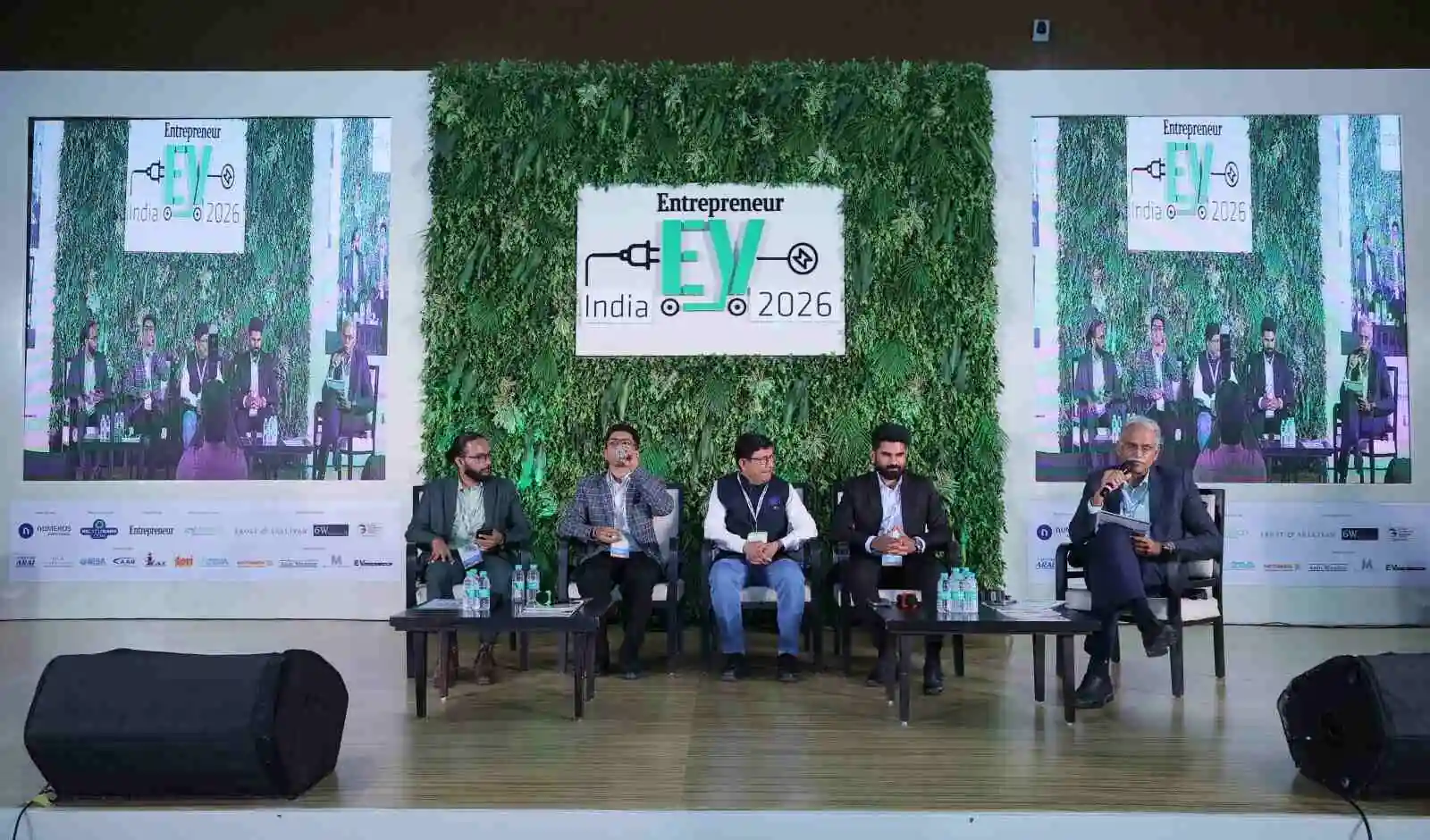
The panel discussion focused extensively on India’s rapidly evolving battery and energy storage ecosystem. Experts highlighted that India’s electric mobility and energy transition are no longer limited to discussions, with significant on-ground progress being made in gigafactories, battery manufacturing, energy storage and recycling.
The panel was moderated by EV industry advisor Vijayanand Samudrala. The discussion featured Rahul Gogi, Founder and CEO, RecycleKaro; Venkat Rajaraman, Founder and CEO, Cygni Energy; Manish Rathi, Vice President – Operations Business Development, MiniMines; and Robin Jacob Joseph, Market Development – Electric Vehicle Platform, Indian Subcontinent, Covestro.
The discussion focused on building a strong, self-reliant and circular battery value chain. Experts shared their views on critical minerals, advanced materials, cell and battery pack manufacturing, indigenous technology, technology partnerships, safety and battery recycling.
The experts stressed that India must develop the entire battery ecosystem in an integrated manner instead of focusing only on increasing cell manufacturing capacity. Rather than competing directly with China on cost, India should focus on reliability, safety, application-specific innovation and a strong domestic supply chain as its key strengths.
The discussion also highlighted the need to focus on domestic processing, strategic storage and battery recycling to reduce India’s dependence on imports of critical minerals. The panel underlined that building a strong and globally competitive battery ecosystem will be one of the most important priorities for the future of electric mobility and the energy transition in India.
What are the biggest challenges in building globally competitive battery manufacturing in India? Should India compete with China on cost?
Venkat Rajaraman: India should not focus only on cell manufacturing but needs to develop the entire battery ecosystem. This includes cells, battery packs, power converters, energy management systems, software, recycling and technologies related to cathodes and anodes.
Directly competing with China on cost may not be the right strategy at this stage, as China has two decades of policy support, subsidies, a large domestic market and a strong supply chain. India should initially focus on reliability, safety, localization and battery designs specifically suited to Indian conditions.
Extreme temperatures, flooding and diverse climatic conditions in India pose significant challenges for batteries. Therefore, batteries specifically designed for Indian conditions can become a competitive advantage for the country. India should focus not only on “Made in India” batteries, but on building a battery ecosystem made with materials manufactured in India.
What key material innovations should India focus on over the next five years? What strategy should be adopted for critical mineral security?
Rahul Gogi: India remains almost entirely dependent on imports for critical minerals such as lithium, cobalt, nickel, manganese and graphite. Although India has deposits of some of these minerals, the country lacks the processing technologies required to convert them into battery-grade materials.
The government has already initiated efforts in this direction through measures such as the National Critical Mineral Mission. At the same time, India’s growing e-waste volumes and end-of-life batteries from electric vehicles can become an important source for recovering critical minerals.
India must focus on the proper channelization and recycling of e-waste and batteries, while also developing strategic reserves of critical minerals. Just as the country has a strategic reserve system for crude oil, there is a need to create a critical mineral bank for lithium, cobalt, nickel and other important minerals.
How important are advanced polymers and insulation materials for battery pack safety, weight and large-scale manufacturing? Can this be a rapid localization opportunity for India?
Robin Jacob Joseph: Polymers and other advanced materials play a highly important role in battery packs. These materials influence safety, weight, fire retardancy, insulation and large-scale manufacturing.
In India, material selection often takes place after the design has already been finalized, whereas materials should be considered at the initial stage of the design process. As production moves from manual manufacturing to robotic and automated manufacturing, millimetre-level precision in components becomes essential.
Therefore, battery pack design, material selection and manufacturing processes must be developed together. India already has access to several engineered polymers and global technology solutions, making this an important opportunity for rapid localization.
How should India balance the development of indigenous technology with partnerships involving foreign technology? Is there a risk that today’s technology may become obsolete in the future?
Manish Rathi: India should pursue indigenous technology development and technology partnerships simultaneously. Technology transfers can help India rapidly build capabilities in manufacturing, research and development, and quality parameters.
Starting with proven technology enables companies to understand critical aspects related to cost, quality and supply chains. India can then modify and improve the technology according to its own requirements.
Indigenous R&D does not necessarily mean developing an entirely new chemistry every time. Improving existing cathode, anode and other technologies to reduce costs and enhance performance is also important innovation. India should first adopt proven technologies to achieve scale quickly and then gradually develop its own technologies and supply chains.
How can India strengthen the supply chain for the raw materials required for batteries?
Panel: India should not limit the battery ecosystem to cell and pack manufacturing. Critical minerals, refining, advanced materials, cell manufacturing, battery packs, recycling and second-life applications must be developed as an integrated value chain.
The country needs to ensure the availability of critical minerals through domestic resources, international partnerships, strategic reserves and recycling.
Should India develop a different competitive model instead of directly competing with China?
Panel: Rather than replicating China’s entire supply chain, India should develop a model based on its own strengths. Reliability, safety, application-specific innovation, software, recycling and sustainable manufacturing can become India key strengths.
India domestic market presents a major opportunity. However, developing products with global markets in mind can enable Indian companies to compete at a much larger scale.
How important will recycling be in India’s battery ecosystem?
Panel: Recycling will become a critical part of India’s battery value chain. By 2030, India is expected to have a significant volume of used lithium-ion batteries. Lithium, nickel, cobalt and other critical minerals can be recovered from these batteries.
This can reduce India’s dependence on imports and provide important raw materials for domestic battery manufacturing. Recycling should not be viewed merely as waste management, but as a key pillar of critical mineral security.
How can India build a strong and globally competitive battery ecosystem?
Panel: India needs to adopt an integrated strategy across every level of the battery value chain. This includes critical mineral security, advanced materials, cell and pack manufacturing, battery safety, new chemistries, recycling and second-life applications.
The most important priority for India is to focus not only on increasing manufacturing capacity but also on creating a strong, resilient and circular battery ecosystem that can meet domestic requirements while remaining competitive in global markets.
Conclusion
Building a strong and globally competitive battery ecosystem in India will require more than simply increasing gigafactory and cell manufacturing capacity. Critical mineral availability, domestic processing, advanced materials, battery pack manufacturing, safety, indigenous technology and recycling must be developed as an integrated value chain.
Experts stressed that instead of competing with China solely on cost, India should focus on reliability, safety, application-specific innovation suited to Indian conditions and a strong domestic supply chain. At the same time, India must use technology partnerships to rapidly build capabilities while gradually strengthening its indigenous technology and manufacturing capabilities.
The discussion also made it clear that battery recycling will play a critical role in India’s future critical mineral security. A strong circular economy can enable the recovery of important minerals from used batteries, reducing import dependence and strengthening domestic battery manufacturing.
Overall, India’s battery future will not depend solely on cell production capacity. It will depend on an integrated, safe, self-reliant and circular ecosystem capable of meeting the country’s growing electric mobility and energy storage needs while establishing India as a significant force in the global battery value chain.


