


 211
/
7
Min Read
211
/
7
Min Read


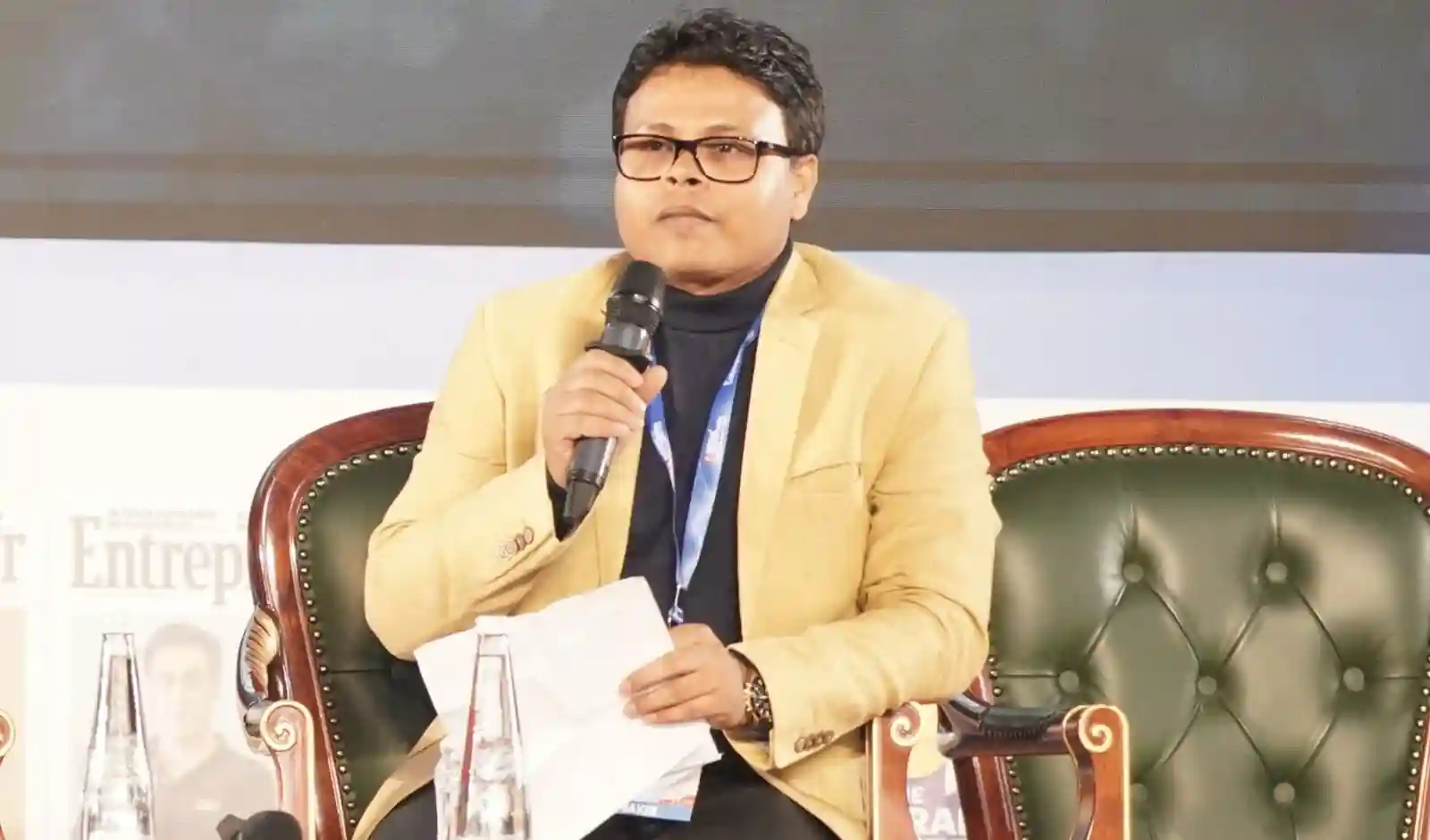
At the ‘National Education, Employability and EdTech Summit’ organized by Entrepreneur Media at Bharat Mandap, Praveen Kumar Rajbhar highlighted the importance of skill-based education as the real key to employment. He emphasized that in today’s era, degrees alone are not enough; practical skills are what truly create opportunities for young people. During the session, he also answered several important questions related to skill-based education, which are as follows.
Thoughts and Concerns on the 2026 Education Budget
Over the past few years, one positive shift has become visible: the government is gradually acknowledging that India’s traditional education system has not been employment- or business-driven. Merely awarding degrees cannot prepare young people to become self-reliant whether they aspire to secure a job or start their own venture.
Whether it is the implementation of NEP 2020, the increased focus on skill education or initiatives encouraging employment and entrepreneurship among youth, there is a clear shift in thinking. Education must move beyond certificates and focus on capability. In this year’s budget as well, the emphasis on “Education to Employment & Enterprise,” the integration of AI into education, discussions around AI labs, incubation centers and startup support all indicate that the government recognizes the demands of changing times.
Focusing on skill-based education, technology integration, and industry-aligned programs is essential because the future belongs to those who can solve real-world problems. From this perspective, the budget appears to be moving in the right direction. However, my concern begins where the real picture of India begins in the villages. A large portion of the population still resides in rural areas, where schools continue to lack basic digital infrastructure. Discussions about AI labs, skill programs and startup support will remain incomplete unless these facilities effectively reach rural students.
Making announcements is easy; implementing them on the ground is the real test. If these reforms remain limited to cities and select institutions, we risk repeating past mistakes. In my view, the true success of this budget will be when a rural student can confidently say that they too possess skills, access to technology and the opportunity to shape their own future.
Which New Skills Should Students Focus on in 2026?
The question of which skills students should focus on in 2026 cannot be answered by simply listing technologies. Yes, understanding AI, developing an entrepreneurial mindset, problem-solving abilities, leadership qualities and teamwork are extremely important. The future belongs to those who understand systems not just syllabi and who can identify problems and create solutions.
However, I would like to add another important point. There are many perceptions about Gen Z that they have attitude issues, lack long-term commitment, get bored quickly or struggle under pressure. Whether entirely accurate or not, one thing is clear: technical skills alone are not sufficient.
Skills may help you secure a job, but sustaining it, growing within it and reaching leadership positions require more. One must learn how to work with people, manage disagreements, remain balanced under pressure and develop patience. Soft skills, public speaking, communication and emotional maturity are just as important as AI or coding.
I have seen many talented young individuals with strong technical abilities fail to sustain long-term growth due to a lack of behavioral skills, teamwork, and patience. They begin strongly but cannot sustain the journey. Therefore, students in 2026 must be not only technologically proficient but also behaviorally mature. When digital skills are combined with patience, discipline, collaboration and communication, true long-term success becomes possible.
How Important Is Skill-Based Education?
For me, the answer is simple: skill-based education is as essential as education itself. Why do we pursue education? To build a better social life, stand on our own feet, and secure employment or start a business. True education prepares you for both today and tomorrow. However, our reality is different. We find many degree holders, yet many lack the competence required to receive a job offer or confidently start their own venture.
No one studies to withdraw from society; the purpose of education is clear to build a career or enterprise. Therefore, education must align with that purpose. If education is not connected to employment and business, it remains incomplete.
An unemployed youth first becomes a burden on themselves, then on their family and gradually on society and the nation. Skill-based education is not an optional add-on; it is a necessity of our time. If we want our youth to become self-reliant, we must provide education that not only imparts knowledge but also builds the ability to earn, create and grow.
Skilling You’s Contribution to Advanced Learning and Future Goals
Our company’s name 'Skilling You' reflects our direction. From the beginning, we believed that traditional education is necessary but not sufficient. Schools and colleges award degrees, but often fail to equip students with real-world skills.
Our vision is clear: to teach skills that make young people employment- and business-ready. These include communication skills, technological and AI literacy, confidence building, soft skills and entrepreneurial capabilities. Students who remain confined to the syllabus risk falling behind in the future.
The corporate environment has evolved. Companies are no longer looking for degree holders alone; they seek individuals with ownership, problem-solving mindsets and entrepreneurial thinking. We aim to introduce these skills within classrooms so that students who want to launch startups feel confident and capable and those who pursue jobs become value creators rather than mere employees.
Looking ahead, our goal is larger. We aim to expand skill education deeply into rural and small-town India, simplify technology and AI learning and build a learning ecosystem where every student feels empowered. Our mission is not just training it is building a generation of self-reliant, confident youth who contribute to the nation’s economic strength.
Advantages and Challenges of Digital Learning
Digital learning has transformed the definition of education. Today, anyone can learn anything, anytime, from anywhere. Leading universities and professionals deliver knowledge directly to students through edtech platforms. Many institutions now reach learners globally through online programs.
The biggest advantage is accessibility and affordability. Courses that once required relocating to another city are now available on a mobile screen. For students in small towns and villages, this is a major opportunity. However, challenges exist. Digital platforms provide opportunity, but discipline must come from within. Many enroll in courses but fail to complete them. They begin learning on YouTube and get distracted within minutes.
The biggest requirement of digital education is self-discipline. There is no classroom bell or teacher standing in front of you daily. You must decide whether you are there to learn or merely to pass time. Technology has opened the door; stepping inside is the student’s responsibility.
Can India Become a Global Education Hub?
Absolutely, India can become a global education hub and historically, we already were. When organized education systems were still evolving elsewhere, India had the Gurukul tradition. Education was holistic, encompassing philosophy, mathematics, astronomy, Ayurveda and governance. Institutions like Nalanda and Takshashila attracted students from across the world. These were not merely buildings but centers of knowledge and research influencing global thought.
Education is embedded in our cultural DNA. Today, India stands at a unique moment. We are one of the youngest nations in the world and such a demographic advantage is a tremendous strength. Indians are leading major global corporations and contributing significantly to technology, research, management and the startup ecosystem worldwide.
If we align our education system with skills, research, innovation and technology while blending our ancient knowledge traditions with modern needs India can once again become a global education hub. However, we must move beyond a degree-granting system toward a value-creating system. We need institutions that cultivate thinking, innovation and leadership.
In the truest sense, skill-based education is the key to employment. If we provide our youth with the right direction, the right skills and the right opportunities, India will not only become a global education hub but also a global talent hub.


