


 101
/
5
Min Read
101
/
5
Min Read


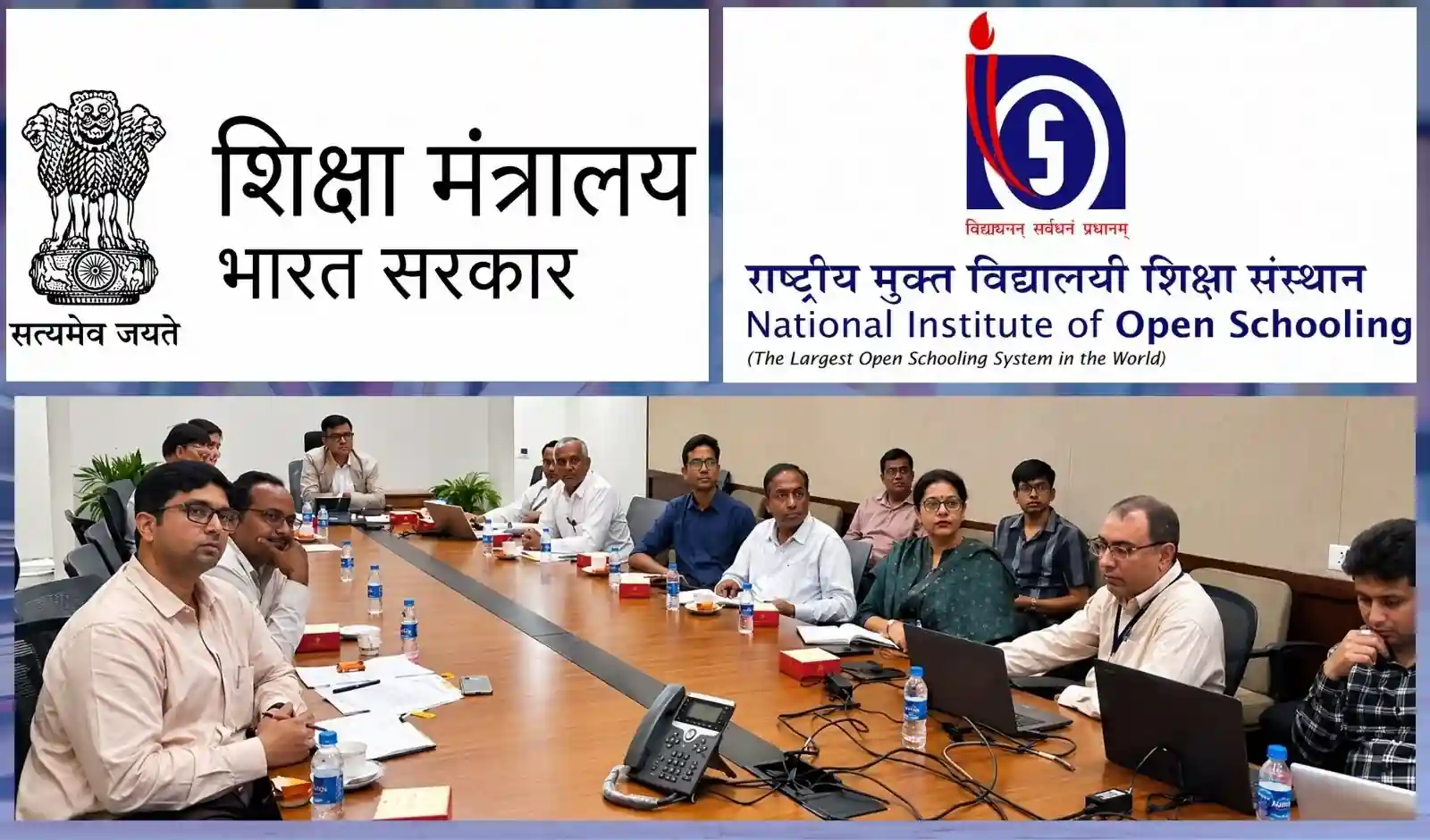
In this direction, the Department of School Education and Literacy (DoSEL) under the Ministry of Education organised a high-level meeting chaired by DoSEL Secretary Sanjay Kumar.
The main objective of the meeting was to prepare a new strategy especially for children in the 14-18 age group who are unable to attend school due to various reasons. Detailed discussions were also held regarding the implementation plan of the proposed new initiative by the National Institute of Open Schooling (NIOS).
The meeting was attended by DoSEL Joint Secretary Prachi Pandey, NIOS Chairman Professor Akhilesh Mishra, Secretary Colonel Shakeel Ahmed, senior officials from the Ministry of Education, representatives from different states, district collectors from selected pilot districts and education department officials. According to education experts, this initiative is being seen as an important step towards reducing the growing dropout rate in the country and ensuring education reaches every child.
A Major Challenge in Reaching from Class 1 to Class 12
Addressing the meeting, DoSEL Secretary Sanjay Kumar said that a large number of children in the country discontinue their education midway. Referring to official data, he stated that out of every 100 children enrolled in Class 1, only 62 students are able to reach Class 12. In addition, according to the latest PLFS data, more than two crore children in the 14-18 age group are currently out of school.
He explained that financial difficulties, domestic responsibilities, and employment-related pressures are among the major reasons behind children dropping out of school. He stressed that every child should receive education at least up to the secondary and higher secondary level. He also emphasised the need to provide skill-based education and vocational training aligned with local employment opportunities.
Open and Distance Learning to Reconnect Students with Education
According to the Ministry of Education, children who are unable to return to regular schools will be connected to education through Open and Distance Learning (ODL). For this, support from NIOS and state open schools will be taken to provide flexible and accessible learning opportunities to students.
Sanjay Kumar highlighted the crucial role of district administrations and district collectors in making this mission successful. He said that the initiative would not remain just a government scheme but would be implemented as a nationwide campaign to ensure education reaches every child in need.
Work Will Be Based on a Data-Driven Strategy
DoSEL Joint Secretary Prachi Pandey stated that the issue of out-of-school children would be addressed in “mission mode.” She added that a data-driven strategy would be adopted under this initiative to accurately identify every child and strengthen the process of reconnecting them with education.
She further said that special focus would be placed on identifying children, enrolling them and ensuring their retention in education through better coordination among states, districts and local administrations. Before the formal launch of the initiative, activities such as selection of NIOS facilitators, distribution of starter kits, preliminary surveys and initial student enrolments will be completed.
Students Will Receive Multiple Benefits
Opportunity to Resume Studies and Build Careers : According to education experts, the biggest benefit of this initiative will be for students who had discontinued their studies due to financial or social reasons. Through Open and Distance Learning, such children will get an opportunity to reconnect with education, complete their schooling and access better opportunities for higher education and employment in the future.
Under this initiative, the focus will not only remain on general education but also on skill-based education and vocational training. Students will receive training according to the needs of local industries and employment markets, helping them develop job-oriented skills and opening opportunities for jobs, self-employment and entrepreneurship.
Skill-Based Education to Improve Employment Opportunities : The initiative will place strong emphasis on skill-based education and vocational learning. Students will be trained according to industry and market requirements, enabling them to learn practical and employability-oriented skills at an early age. Experts believe this could significantly improve opportunities related to employment, self-employment and entrepreneurship for young people.
Benefits Through Digital and Flexible Learning : Through the Open and Distance Learning model, students will get the flexibility to continue their studies conveniently. Children who cannot attend regular schools will be able to study from home or from their local areas. App-based monitoring systems and digital learning support will continuously track students’ progress, which may help reduce dropout rates.
This initiative is expected to be especially beneficial for children from rural areas, economically weaker families and working children. It could help reconnect such students with education and provide them with a better future.
NIOS Chairman Professor Akhilesh Mishra said that education is not just about studies, but also a medium of hope, dignity and a better future. He stated that the biggest challenge is reaching children who have become completely disconnected from the education system. He described this initiative as a “people’s movement for educational inclusion,” aimed at reconnecting every child and youth with learning opportunities.
Education experts also believe that if implemented effectively, this initiative could successfully reconnect millions of dropout children with education and help them secure a better future.


