


 102
/
3
Min Read
102
/
3
Min Read



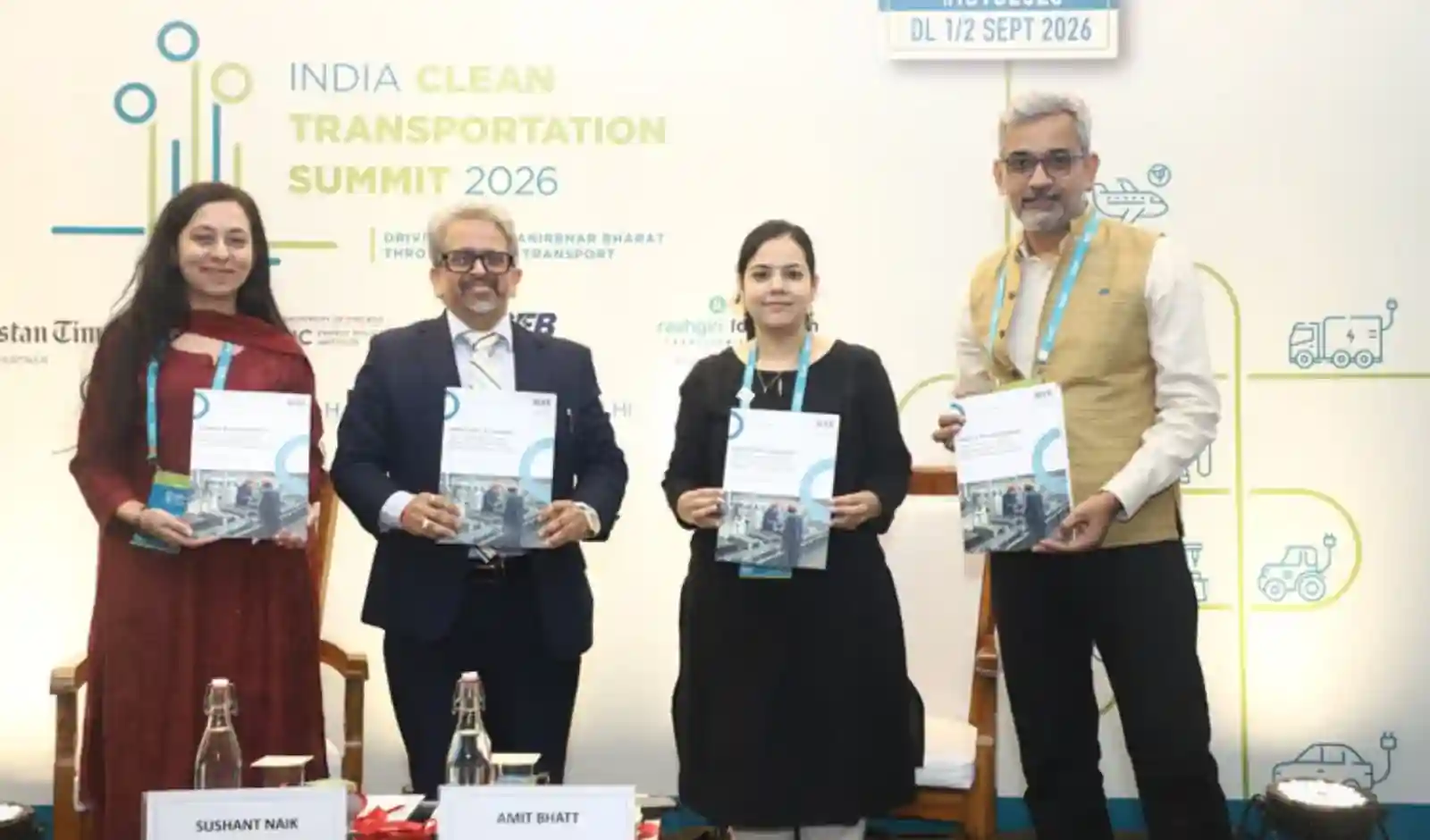
Rapid adoption of electric vehicles (EVs) across India road transport sector could help the country save up to $125 billion annually on combined crude oil and battery import expenditure by 2050. The finding comes from a working paper released by the International Council on Clean Transportation (ICCT) at the India Clean Transportation Summit 2026.
According to the study, $94 billion of the potential savings could come from the pace of EV adoption alone, even if all battery cells continue to be imported. The remaining $31 billion in savings could come from expanding domestic battery cell manufacturing and reducing dependence on imports.
The report noted that the financial savings from reducing petrol and diesel imports would significantly outweigh the cost of procuring imported battery cells.
The study found that under the baseline crude oil price scenario, the difference between the slowest and fastest electrification pathways could result in a $104 billion difference in annual import costs by 2050. Under a high crude oil price scenario, the gap could widen to $166 billion annually.
Amit Bhatt, India Managing Director at ICCT, said faster electrification would reduce India’s exposure to global crude oil price fluctuations and strengthen the country’s push towards Aatmanirbhar Bharat. He added that while localising battery manufacturing would provide additional benefits, the pace of EV adoption would be the first line of protection against import risks.
The working paper assesses battery demand across major vehicle categories, including two-wheelers, three-wheelers, passenger cars, light commercial vehicles, buses and heavy trucks between 2024 and 2050.
Across all scenarios, India’s domestic battery requirement is expected to rise sharply after 2030. Under the baseline scenario, battery demand could reach 340 gigawatt-hours (GWh) by 2050, while an aggressive EV adoption scenario could push demand to 573 GWh.
The study noted that establishing domestic cell manufacturing at scale will take time. As a result, imports are expected to meet almost all of India’s battery cell requirements through 2030.
Sushant Naik, Chairman of the SIAM Electric Mobility Group and Chief Corporate Affairs Officer at Tata Motors, said the automotive industry has already reduced imports by around INR 20,000 crore by manufacturing vehicles for the Indian market.
He said India’s future technology strategy should focus not only on manufacturing batteries and motors domestically but also on developing the skills and design capabilities required to support them. Localisation, he added, needs to extend across the entire value chain rather than remain limited to final assembly.
Namita Singh, co-author of the study, said every EV added to India’s roads reduces the country’s dependence on imported oil, regardless of whether its battery is manufactured domestically or imported.
According to the study, accelerating EV adoption alone could reduce India’s road transport import bill by up to 61% by 2050. Combining rapid EV manufacturing with domestic battery cell production could increase the savings to 82%, equivalent to around $125 billion annually.


