



 79
/
6
Min Read
79
/
6
Min Read


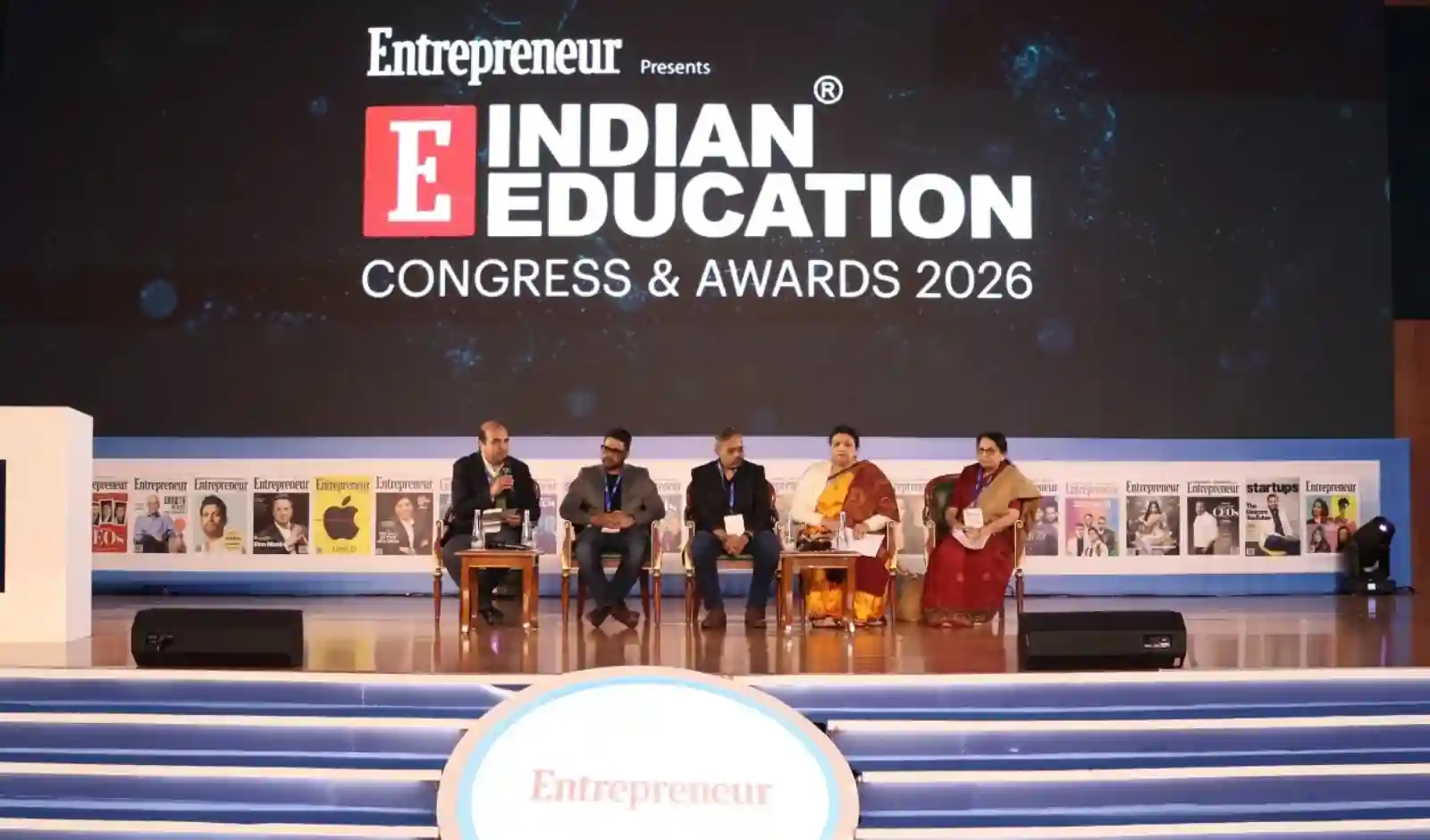
The central theme of this year was “Universities and Industry: Building Start-up Culture & Co-Creating Future-Ready Talent Pool.” The event emphasized that in the rapidly evolving technological landscape, especially in the era of Artificial Intelligence (AI), traditional education models are no longer sufficient. India must bring significant changes in its education system to make its youth globally competitive.
Experts’ Consensus: Need for Transformation in Education
The discussion featured prominent experts including Prof. Parimal Mandke (VP, NIIT University), Prof. Ranjana Jha (Vice Chancellor, Indira Gandhi Delhi Technical University for Women), Anuj Vishwakarma (CEO - Higher Education, UpGrad), Shayan Dasverma (Director - India Office & Head of Marketing, South Asia & MENA, Vita Student) and Prof. Deepu Philip (Professor In Charge, Innovation & Incubation, IIT Kanpur). All speakers agreed that the time has come to bridge the gap between universities and industry and build an ecosystem where education goes beyond theory and is aligned with real-world needs.
Limitations of Traditional Education Models
At the beginning of the discussion, it was highlighted that for decades, universities have relied on internships, sandwich programs, industry certifications and skill-based courses to prepare students. While these efforts have improved employability to some extent, they are no longer sufficient in today’s context. Prof. Parimal Mandke described these as “inorganic models” and emphasized the need to move towards “organic hybrid models,” where industry becomes an integral part of the classroom.
She further explained that if industry is integrated at the course level and students are exposed to real-time projects from the first year itself, the learning process would become far more effective. This approach would ensure that students not only gain theoretical knowledge but also develop the ability to understand and solve real-world problems, making them job-ready and innovation-driven.
Expansion of Innovation Ecosystem in Delhi and Promotion of Women Entrepreneurship
Prof. Ranjana Jha highlighted the initiatives taken by the Delhi Government, which have played a crucial role in establishing the capital as a strong startup and innovation hub. She mentioned that 11 incubation centers have been set up across Delhi to promote innovation in universities and professional institutions. These centers are helping thousands of students transform their ideas into startups by providing the necessary platform and resources.
She also spoke about the IGTUW Innovation Foundation, which has emerged as a national model for promoting women-led startups. Currently, more than 50 women-led startups are working in diverse sectors such as AI, healthcare, education, sustainability and design. This initiative is not only empowering women but also strengthening the country’s startup ecosystem.
In addition, she highlighted the NEEV (New Era of Entrepreneurial Ecosystem and Vision) program, which aims to build an entrepreneurial mindset at the school level. The program has reached nearly 1 million students from classes 8 to 12 and includes a dedicated weekly period to teach entrepreneurship, innovation and problem-solving skills.
Talent Gap: A Major Challenge
From an industry perspective, Anuj Vishwakarma raised a critical concern India does not lack talent, but there is a shortage of “quality talent.” He pointed out that while companies are eager to hire, candidates often lack communication skills or practical technical expertise, creating a significant gap between academia and industry.
Sharing his experience from leading startups like Flipkart, Myntra and Ola, he stated that finding the right talent has always been a major challenge. This issue can only be addressed through stronger collaboration between universities and industry, by providing students with real-life exposure. He also emphasized the importance of developing AI and technology skills along with soft skills.
Importance of a Conducive Learning Environment
Shayan Dasverma added that education is not limited to classrooms. The environment in which students live and interact also plays a crucial role in shaping their learning and thinking abilities. He stressed that when students are provided with an environment that encourages open discussions, experimentation and learning from failure, they become more confident and innovative.
He highlighted that workshops, group discussions and peer learning are essential components of student development. Such environments not only enhance skills but also help build qualities like teamwork and leadership, which are vital for future success.
Balancing Competence and Comprehension
Another important topic discussed was the balance between competence (skills) and comprehension (deep understanding). While industry focuses more on skills, universities emphasize conceptual clarity. Experts agreed that in the AI era, achieving a balance between the two is crucial.
They noted that while many routine jobs will be automated in the future, the ability to understand problems and find solutions will remain a uniquely human strength. Therefore, the education system must be designed to develop critical thinking, problem solving and decision-making abilities among students.
The discussion also highlighted that having a creative idea alone is not enough for a startup to succeed. Its success depends on how effectively the idea is brought to the market and how much value it creates.
Towards Value and Wealth Creation
Prof. Parimal Mandke stated that when a startup successfully establishes itself in the market, it not only achieves financial success but also contributes to society and the economy. Prof. Ranjana Jha added that seed funding, mentorship and incubation support are essential to help startups grow.
She mentioned that several startups at her university have received seed funding to develop their prototypes and bring them to market. Such initiatives not only help young entrepreneurs become self-reliant but also enable them to create employment opportunities for others.
Collective Efforts Towards Viksit Bharat 2047
The overall conclusion of the session was clear if India aims to achieve the vision of “Viksit Bharat 2047,” the education system must undergo a complete transformation. Universities, industry, government and startups must work together to build an ecosystem where learning is continuous and aligned with real-world challenges.
The Road Ahead: Skills, Innovation & Collaboration
In conclusion, all speakers agreed that the future belongs to those who are willing to learn, adapt to change and innovate to create value for society. India has a vast pool of young talent and with the right direction and opportunities, the country has the potential to emerge as a global leader.


