


 34
/
3
Min Read
34
/
3
Min Read


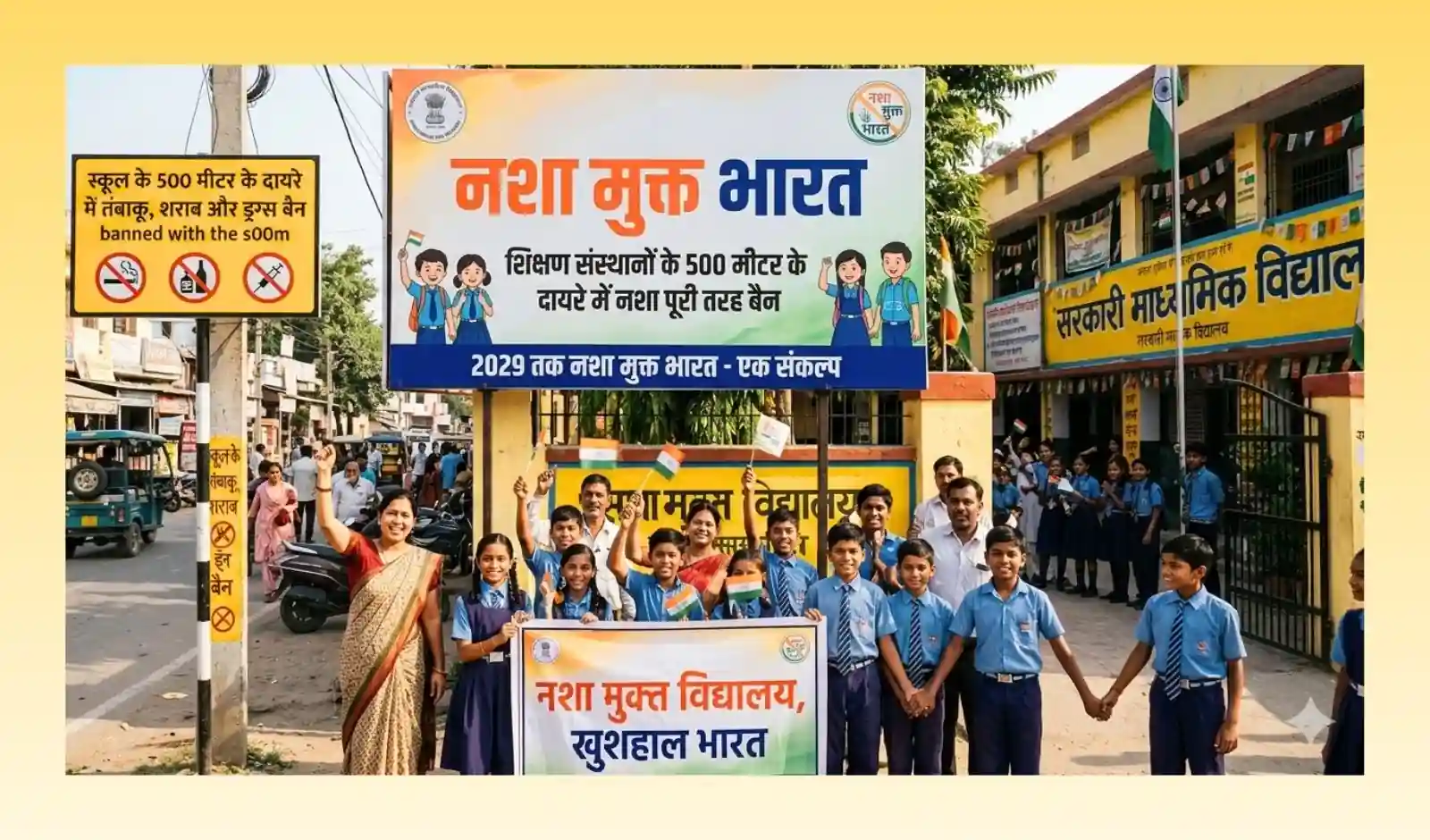
The Ministry of Education has released a 3-year action plan under the “Drug-Free India Campaign” to make schools drug-free.To implement this plan, the Ministry of Home Affairs and the Ministry of Education have jointly issued guidelines to all states and Union Territories.
Rising Drug Abuse Among Children Raises Concern
The ministry stated that the increasing use of drugs among children and adolescents is becoming a serious issue. Therefore, schools will have to play the most important role in tackling this problem.
This decision was taken in the recent meeting of the Narcotics Coordination Centre (NCORD), chaired by Union Home Minister Amit Shah. In the meeting, it was decided that a strong roadmap against drugs will be prepared by 2029, along with a system for regular review.
‘Drug-Free Zone’ Within 500 Meters of Schools
Under the new plan, an area within a 500-meter radius around schools will be declared a “drug-free zone.” If any drug-related activity is found in this area, the school principal or nodal teacher must immediately report it to the police or concerned authorities.
The action plan also focuses on increasing awareness. Schools will promote anti-drug education, posters, campaigns and active student participation. Teachers and school heads will also be trained to guide students effectively.
Active Student Participation and Counseling Support
Students will be actively involved in this campaign, helping to spread awareness among their peers. Additionally, counseling and healthcare services will be provided whenever needed.
States and Union Territories have been instructed to implement this plan on priority and ensure it reaches all government and private schools. They have also been advised to appoint nodal officers at the state and district levels and establish a strong monitoring system.
Goal: Building Safe and Drug-Free Schools
The main objective of this initiative is to create a safe, healthy and drug-free environment in schools so that children and youth stay away from substance abuse and achieve overall development.
Under this initiative, schools will not only be centers of education but also safe spaces that promote positive thinking and correct behavior. Children will be made aware of the harmful effects of drugs from an early stage so they can make informed decisions.
The plan emphasizes behavior change, helping students develop habits that keep them away from drugs. Counseling and healthcare support will also be provided when required. Teachers and school staff will be trained to identify behavioral changes in students and provide timely support.
Overall, this initiative focuses on building strong coordination between schools, families and society to create a robust safety network that protects children from drug abuse.
In addition, the Ministry of Education has asked all states to submit regular reports on the progress of this plan to ensure effective implementation and measurable outcomes.


