


 213
/
4
Min Read
213
/
4
Min Read


These laboratories will provide students and researchers with opportunities for training, research and innovation in next-generation technologies.
The labs will be set up under the Electronics and ICT Academic Project of the Ministry of Electronics and Information Technology. Their objective is to develop indigenous capabilities in Quantum Key Distribution (QKD), Quantum Computing Simulation, Quantum Sensing Hardware and secure communication systems. Experts believe that this initiative will play a significant role in positioning India as a global competitor in the field of quantum technology.
During a programme held at the institute, students and faculty members were informed that while the current wave of technological transformation is being driven by Artificial Intelligence (AI), the next major technological revolution is expected to be led by Quantum Technology. Areas such as quantum communication and post-quantum cryptography are considered crucial not only for digital security but also for national security.
The institute was encouraged to take a leading role in the field of Post-Quantum Cryptography. This technology is being developed to address cybersecurity challenges posed by future quantum computers, and its demand is expected to grow significantly in the coming years.
Students to Receive Training on the Semiverse Platform
It was also announced that MNIT Jaipur students will have access to training on Lam Research’s Semiverse platform. This digital twin-based semiconductor manufacturing and training ecosystem enables students to understand chip design and fabrication processes in a 3D virtual environment.
The Semiverse platform will help students study semiconductor chip architectures in detail, simulate manufacturing processes and develop technical skills aligned with industry requirements. This hands-on exposure will provide valuable insights into the functioning of the modern semiconductor industry.
According to industry estimates, there will be a demand for more than one million semiconductor design professionals in the coming years. Global companies such as NVIDIA, Qualcomm, ARM and AMD are already designing advanced 2-nanometer and 3-nanometer semiconductor chips in India, reflecting the country's growing pool of skilled technical talent.
More Than 323 Universities Receiving Advanced Design Tools
Under the government's Chips to Startup (C2S) Programme, more than 323 universities across the country are being provided with advanced Electronic Design Automation (EDA) tools. These include state-of-the-art semiconductor design platforms from leading global companies such as Synopsys, Cadence and Renesas.
Using these resources, students across India have already designed more than 100 semiconductor chips, which have been fabricated at the Semiconductor Laboratory in Mohali. Students were encouraged to make full use of these facilities to drive innovation and research.
State-of-the-Art AI Lab to Be Established at MNIT
In addition to the quantum laboratories, a modern Artificial Intelligence Lab will also be established at the institute. The facility will offer advanced computing infrastructure and modern tools for research and innovation. It will be connected to the IndiaAI Mission Network, enabling students and researchers to access national-level AI resources and technical support.
The programme also highlighted India's growing advancements in deepfake detection technologies and other AI-driven innovations, which are helping shape the future of artificial intelligence research in the country.
Makers Lab to Offer Hands-On Learning Opportunities
A Makers Lab was also inaugurated at MNIT Jaipur during the programme. The lab will provide students with practical training opportunities in both software and hardware technologies. Facilities will include work on sensors, embedded systems, computer hardware and electronic systems.
The objective of the Makers Lab is to move beyond theoretical learning and give students opportunities to work on real-world projects and develop innovative solutions. This will enhance their technical competencies and improve industry readiness.
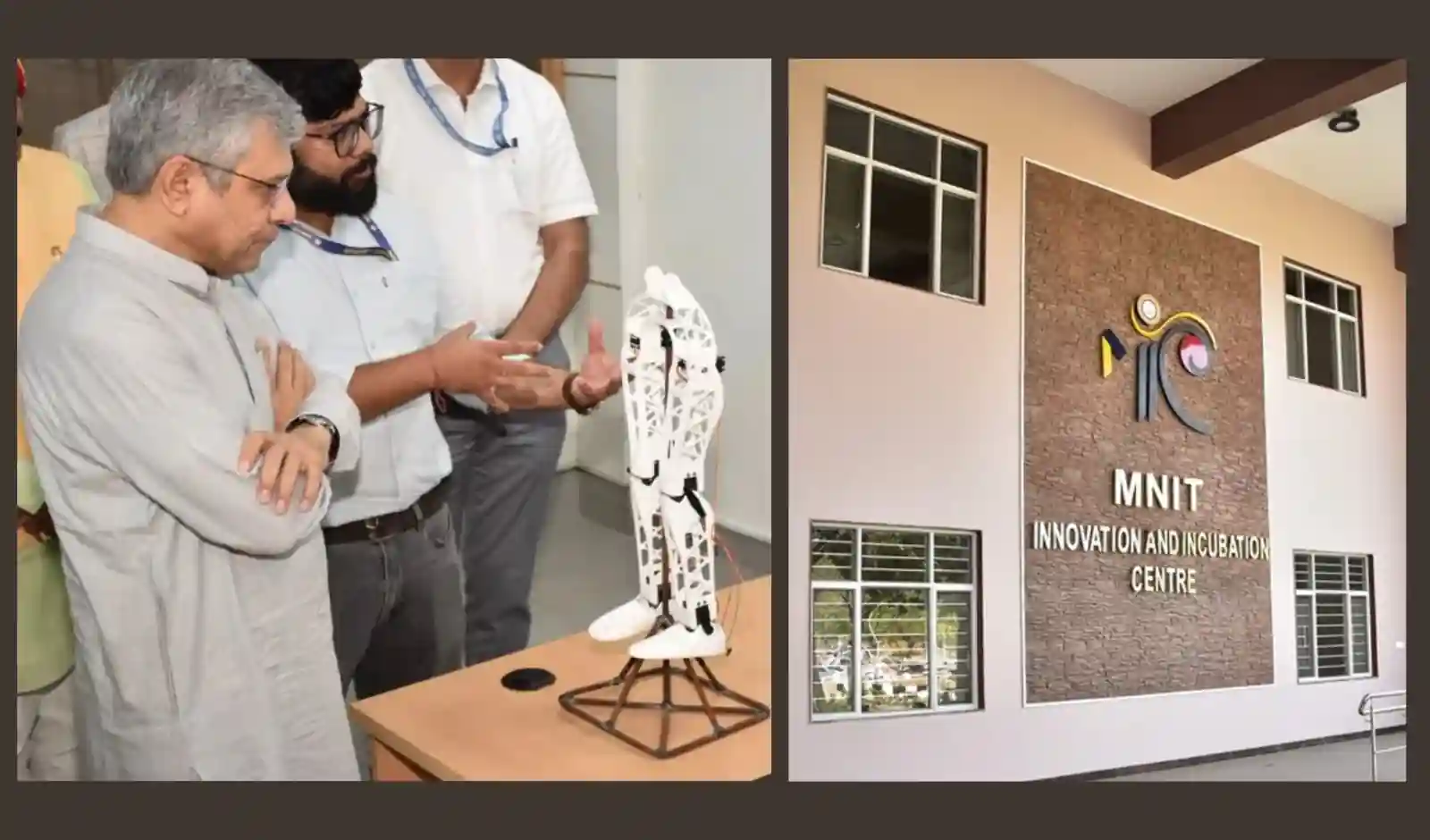
During the event, students showcased various projects and applications in Artificial Intelligence, Robotics, Drone Technology, Structural Engineering and Post-Quantum Cryptography. These presentations highlighted the growing focus on research and innovation in emerging technologies across India's technical institutions.
Experts believe that expanding investments and training opportunities in advanced fields such as Quantum Technology, Artificial Intelligence, and Semiconductors will play a vital role in strengthening India's position as a global technology leader. The new laboratories at MNIT Jaipur are expected to prepare students for future technologies while also contributing to the country's research and innovation ecosystem.


