


 92
/
4
Min Read
92
/
4
Min Read


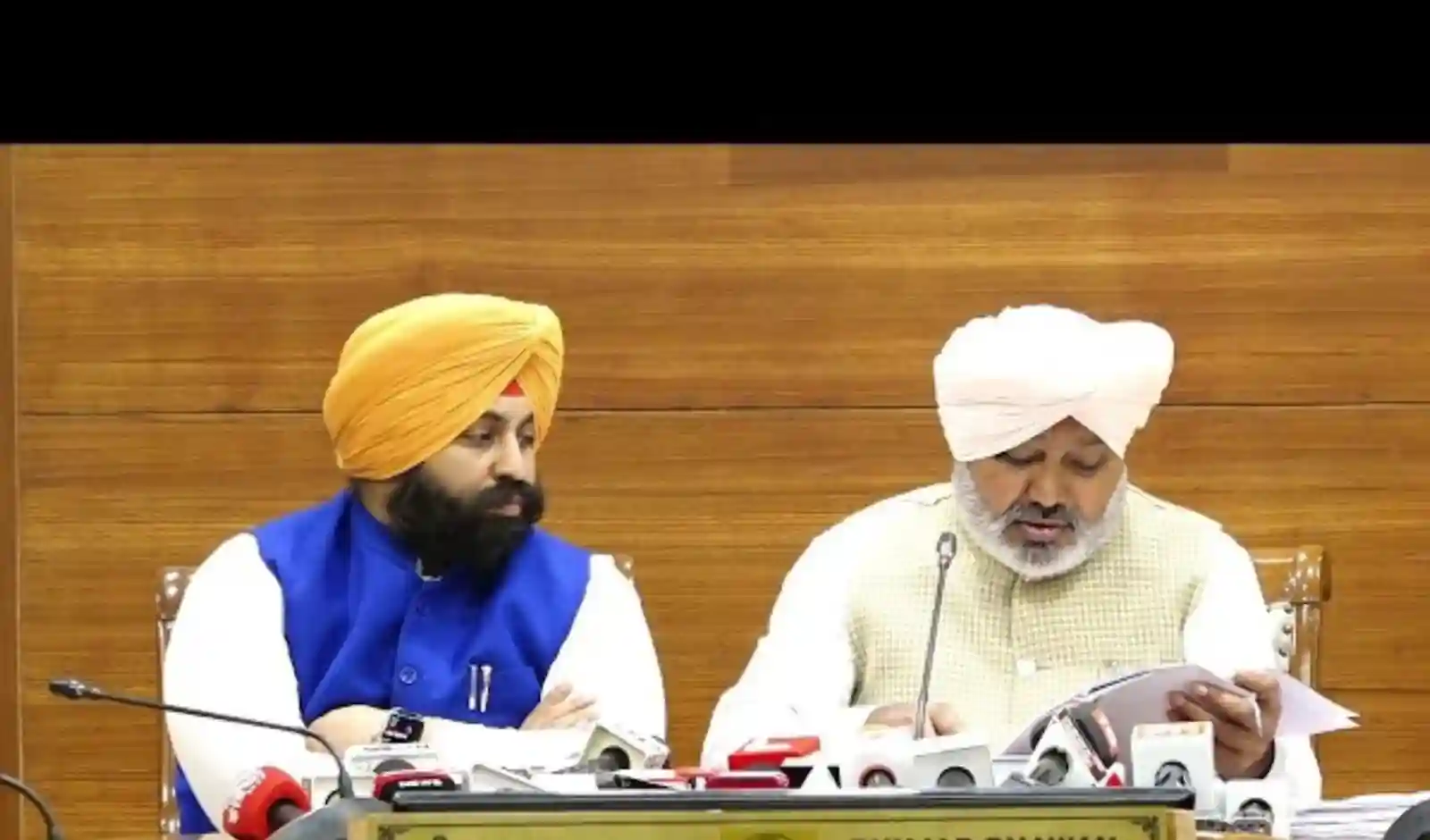
The government has placed special emphasis on modernising schools, expanding higher education and developing new technological facilities. Presenting the budget, Finance Minister Harpal Singh Cheema said that the state government is launching several new initiatives to strengthen the education system and prepare students to compete at the global level.
₹3,500 Crore for ‘Sikhya Kranti 2.0’
A budget of ₹3,500 crore has been allocated for the key education programme ‘Sikhya Kranti 2.0’. The aim of this programme is to improve the infrastructure of government schools in the state over the next six years with support from the World Bank.
Modernisation of Schools
The government has announced an investment of ₹400 crore to expand digital and technological facilities in government schools. Under this initiative, 38,649 desktop computers and 8,268 interactive flat panels will be installed. This will ensure that every secondary and senior secondary school has a modern computer lab.
In addition, 11 Industrial Training Institutes (ITIs) will be upgraded into Centres of Excellence to provide students with skill-based education and better employment opportunities.
New Medical Colleges to Increase Seats
To expand higher education, the state government has announced plans to establish seven new medical colleges. These will be set up in Hoshiarpur, Kapurthala, Sangrur, Shaheed Bhagat Singh Nagar, Lehragaga, Malerkotla and Ludhiana. These institutions are expected to add 600 new MBBS seats. For the Malerkotla Medical College, 38.5 acres of land has already been purchased at a cost of ₹49 crore.
World-Class University in Anandpur Sahib
The budget also announced the establishment of a world-class university in Anandpur Sahib named after Guru Tegh Bahadur.
Education Minister Harjot Singh Bains said that this budget will give a new direction to Punjab’s education system. He stated that the state has already become a national leader in learning outcomes and is now preparing students to compete globally.
The government also highlighted Punjab’s first rank in the PARAKH National Survey conducted by the Government of India, where the state surpassed Kerala in classroom learning outcomes.
Increased Allocation for Health Sector
Although the main focus of the budget is education, the allocation for the health sector has also been increased by 23% to ₹6,879 crore. This includes ₹2,000 crore for the Chief Minister Sehat Scheme, which provides an annual health insurance cover of up to ₹10 lakh per family. The government has also announced the establishment of 143 new Aam Aadmi Clinics to further strengthen access to primary healthcare services.
Focus on Social and Women’s Welfare
The budget has also placed special emphasis on women’s welfare and social security. ₹600 crore has been allocated for the free bus travel scheme for women. According to the budget proposals, women made around 12 crore free journeys under the scheme last year.
The expenditure for providing free sanitary pads to 13.65 lakh women has also been increased from ₹43 crore to ₹64 crore. Under this programme, around 1.2 crore sanitary pads are distributed every month across the state.
For social welfare measures, ₹6,150 crore has been allocated to provide monthly financial assistance to 36.52 lakh beneficiaries, including the elderly, widows, destitute women, dependent children and persons with disabilities.
Overall, ₹18,304 crore has been allocated for the social welfare and justice sector, which is the highest allocation ever for this category.
The budget also includes provisions of ₹360 crore for the Ashirwad Scheme, ₹261 crore for the Post Matric Scholarship Scheme and ₹75 crore for the Adarsh Gram Scheme. Reaffirming the government’s commitment to disadvantaged sections, the Finance Minister announced that ₹17,700 crore has been allocated under the Scheduled Caste Sub-Plan, which accounts for 35.23% of the state’s total development expenditure for 2026-27.
Overall, the budget is seen as an important step toward strengthening educational infrastructure, expanding digital facilities and increasing opportunities in higher education.


